History of Animation
- 13 February 2026
- 10 min read

The word „animation“ means exactly that: the Latin „animare“ means „to bring to life". The sequence of artificially generated images via projection creates the illusion of movement when viewed. Another word for this is „stop motion“. Since the first animated films, the visual style and intensity of the illusion have continued to evolve.
In recent years, computers have revolutionized animation technology. In addition to puppet animation, cartoon animation, and other forms, computer animation has been around since 1974. It is inherently designed to create photorealistic simulations. However, it can also be used in abstract ways. For example, a style modeled after cartoon animation can be combined with a less abstract background.
Early inventions
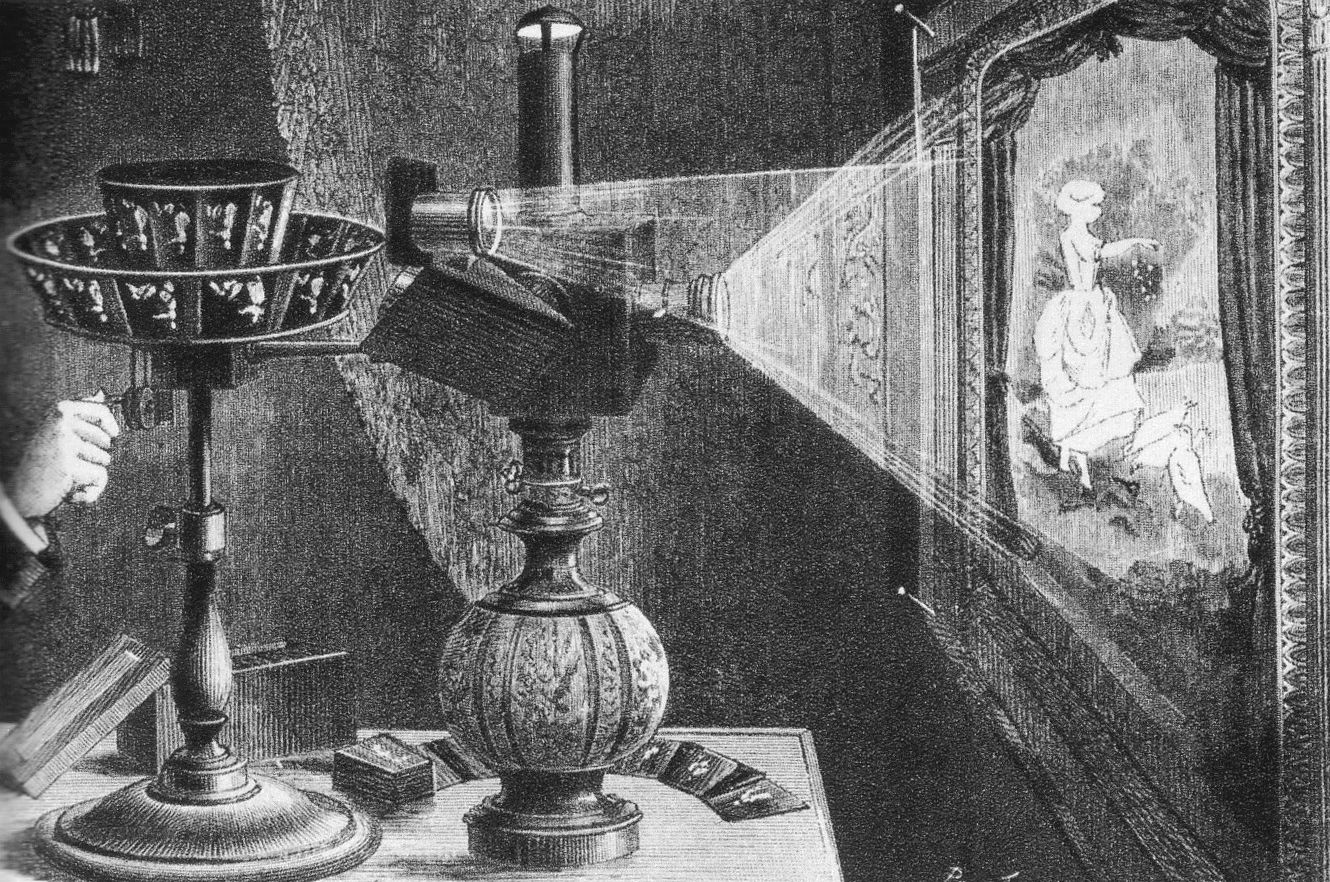
The first animated drawings projected onto a screen were created by Frenchman Émile Reynaud, who presented them in Paris in 1892. For his patented „optical theater“, he used gelatin film painted directly onto the film, which was then run through a projector. In 1906, American director James Stuart Blackton reinvented animated film and produced the films „Humorous Phases Of Funny Faces“ and „The Magic Fountain Pen“. To do this, he used a new invention: the movie camera. However, he then returned to live-action film, believing that animation was just a pointless gimmick.
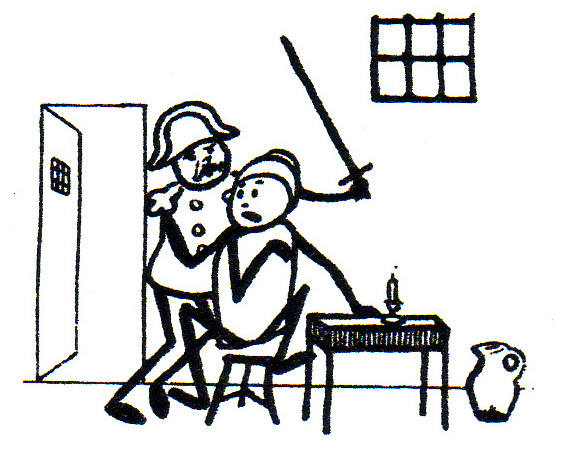
Émile Cohl, a French cartoonist who produced a total of 100 dessins animés between 1908 and 1918, is considered the true father of animated film. His first film, „Fantasmagorie“, in which an elephant transforms into a dancer, lasted just under two minutes. In the same year, Cohl released what is probably his best-known animated film, „Le Cauchemar du Fantoche“.
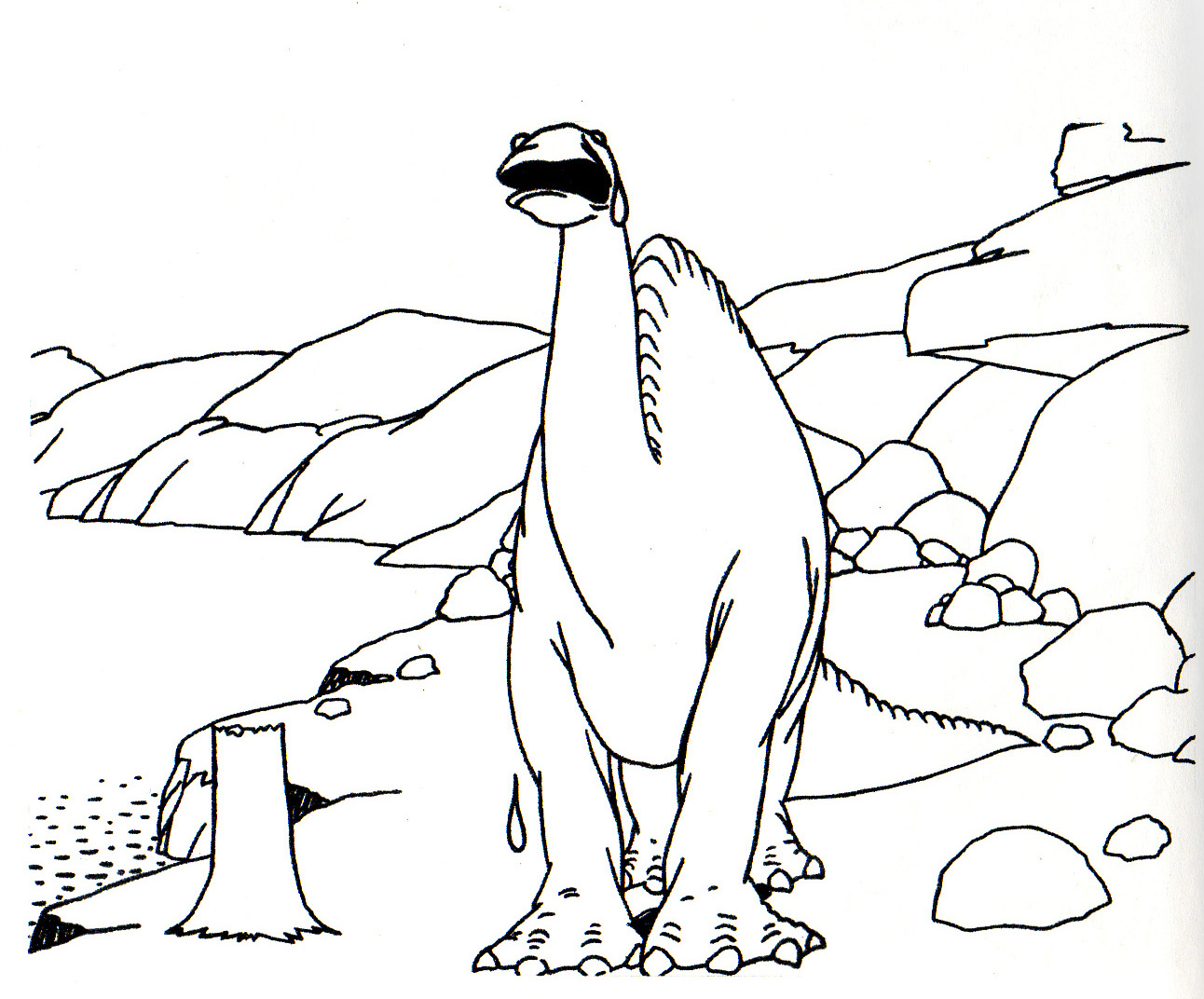
Winsor McCay ultimately helped animation gain popularity by creating the first popular animated character „Gertie, the Dinosaur“ in 1914. As a result, the first animation studios were established in the early 1920s. There, a systematic working technique was developed, the processes of which are still valid today. While initially all drawings were photographed directly, in 1920 cels were introduced, allowing the characters to be combined with elaborate backgrounds. The main output was a series of short films featuring the same main character. The comic strips in daily newspapers served as templates.
An early industry emerges
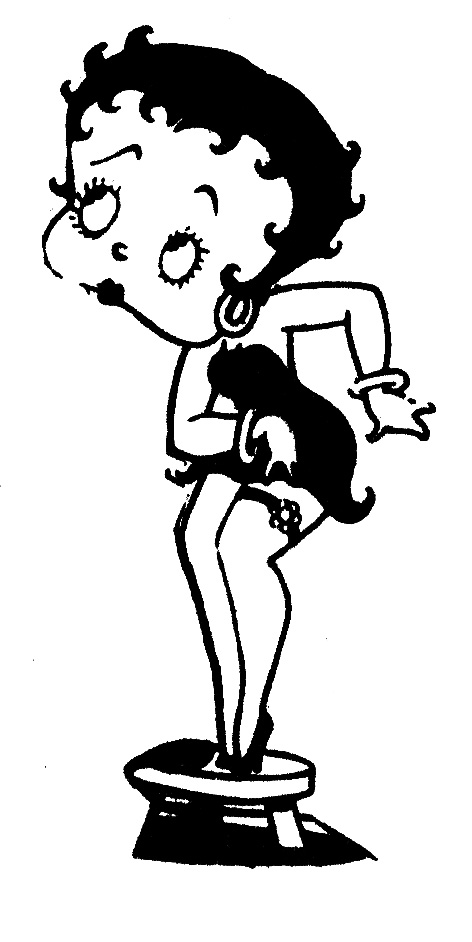
Alongside Max Fleischer („Betty Boop“), Bud Fisher („Mutt and Jeff“) and Pat Sullivan („Felix the Cat“), animated films by Walt Disney enjoyed growing popularity, with his first film „Skeleton Dance“ featuring dancing skeletons.
The rapid increase in the cost of animated film production required a large domestic market to offset the resulting expenses. Europe lacked this initial closed market. As a result, US animated films that had already recouped their investment quickly overwhelmed the competition in Europe.
While Swedish director Victor Bergdahl benefited from the dominance of Scandinavian films throughout Europe with his series „Captain Grogg“ and „Reindeer Knüppeldick“, the First World War saw a flood of American films that domestic producers were powerless to compete with. Kurt Wiese with his series „Lustige Jagten und Abenteuer“ (Funny Hunts and Adventures) and Otto Hermann with his two crooks „Plimps und Plumps“ had to give up their work after their first attempts on the market.
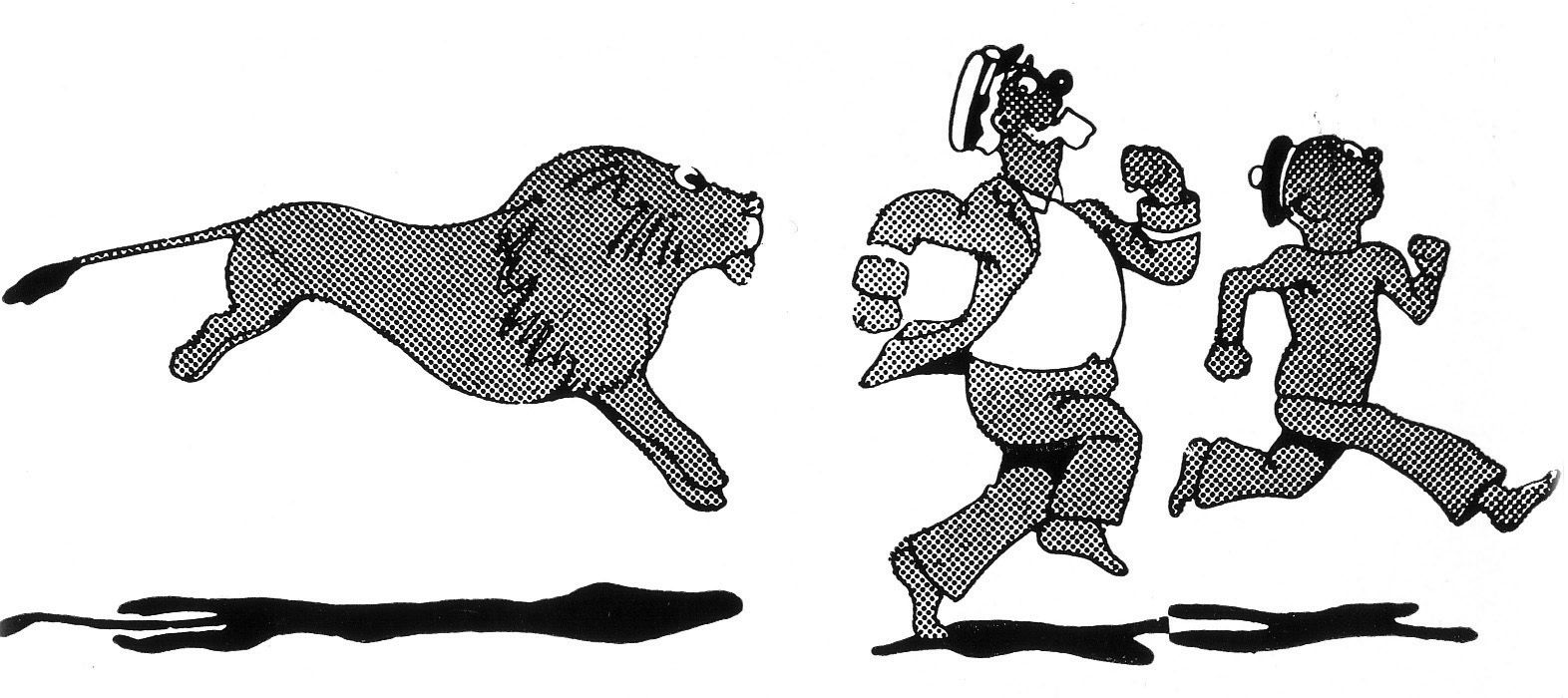
This gave rise to abstract film, limited to moving geometric shapes, surfaces, and lines, some of which were painted directly onto the film stock, and silhouette film, which, similar to shadow play, showed moving paper cutouts. The Berlin painter Lotte Reiniger designed silhouettes with movable joints for her films, such as in her first feature film, „The Adventures of Prince Achmed“ from 1926, with which she celebrated international success.
Commercialization
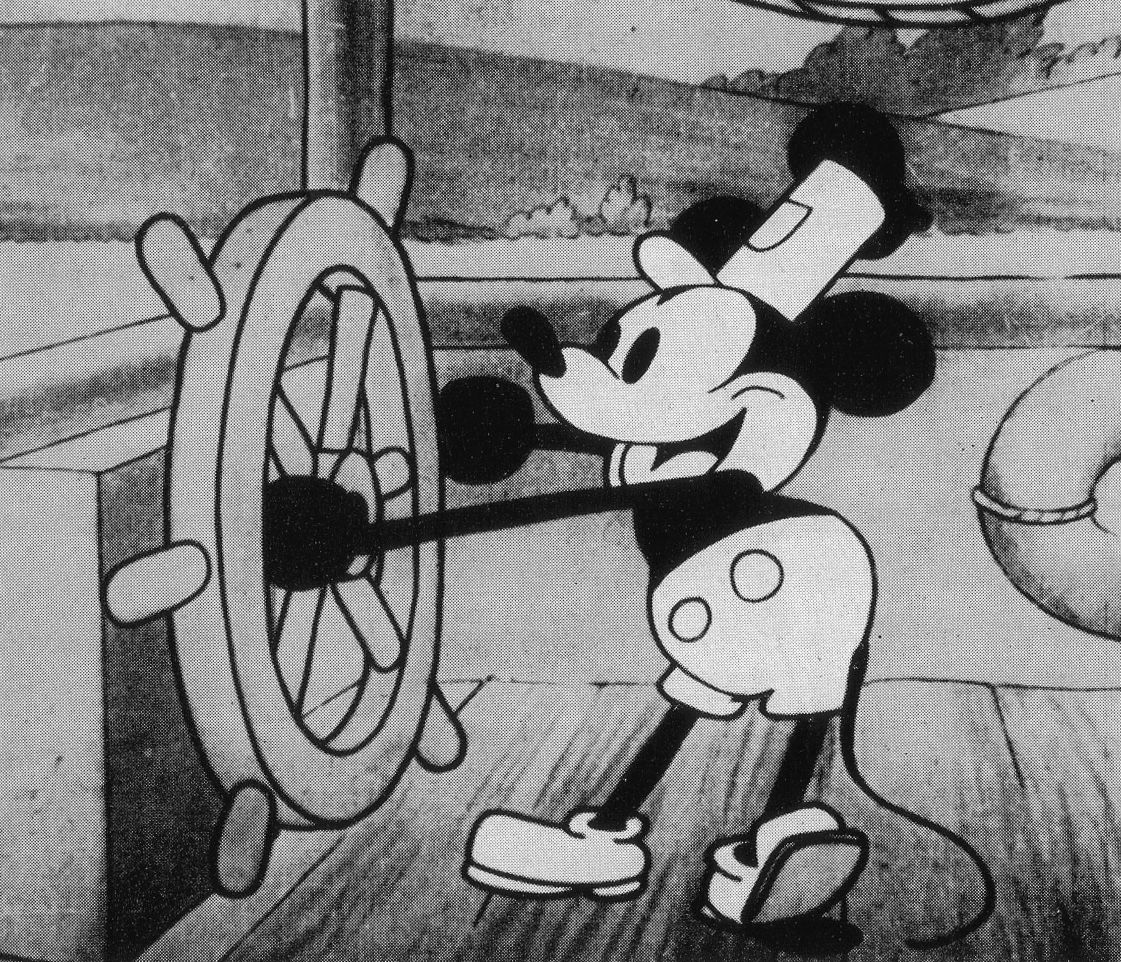
Meanwhile, Walt Disney had achieved worldwide success with his creation "Mickey Mouse." He understood how to blend the newly introduced sound with his animated images to create a unified whole. In 1928, his film „Steamboat Willie“, the first film featuring Mickey as the first animated sound film ever, premiered. He continuously refined the techniques for processing the individual frames. First, he introduced chiaroscuro, then color in 1930. In 1933, he had the so-called multiplane camera developed, which made it possible to shift the background across several transparencies using a mechanism, creating the spatial impression of a camera movement. Disney reached the peak of his career with his first feature film „Snow White and the Seven Dwarfs“ in 1937.
After nearly twenty years of sole dominance over the medium of animation, his former employee Stephen Bosustow, founder of UPA (United Productions of America), developed into a serious economic competitor. With his creations such as Mr. Magoo, he exploited one of Disney's weaknesses: the portrayal of humans. Disney failed in this area for a long time, as his characters were only caricatures and animated too smoothly, while his humans were uncaricaturized positive heroes.
With commercialization and a growing market thanks to television, Bosustow introduced „limited animation“ in the 1950s. This meant that it was no longer necessary to draw the entire character, but only the moving parts. In 1970, computers were added to calculate camera movements. From 1990 onwards, photographing the drawings was replaced by scanning, which meant they could now be colored on a PC with much less effort.
Until the end of the 1960s, German television remained largely free of cartoons. Production was far too expensive, and even ARD and ZDF could not afford to purchase them. It was not until 1968 with „The Flintstones“ and 1972 with „Porky Pig“, that established broadcasts of US and later Asian cartoon series began.
Asia is increasingly involved in the development of animated films. A completely new drawing style called anime comes from Japan and spreads rapidly. „The Wizard and the Bandits“ was the first anime to be shown in German cinemas in 1961. „Wickie and the Strong Men“ was the first series to be shown on German television, premiering on ZDF in 1974. Anime makes extensive use of limited animation, as it is primarily produced as mass-market entertainment.
Computer animation changes everything
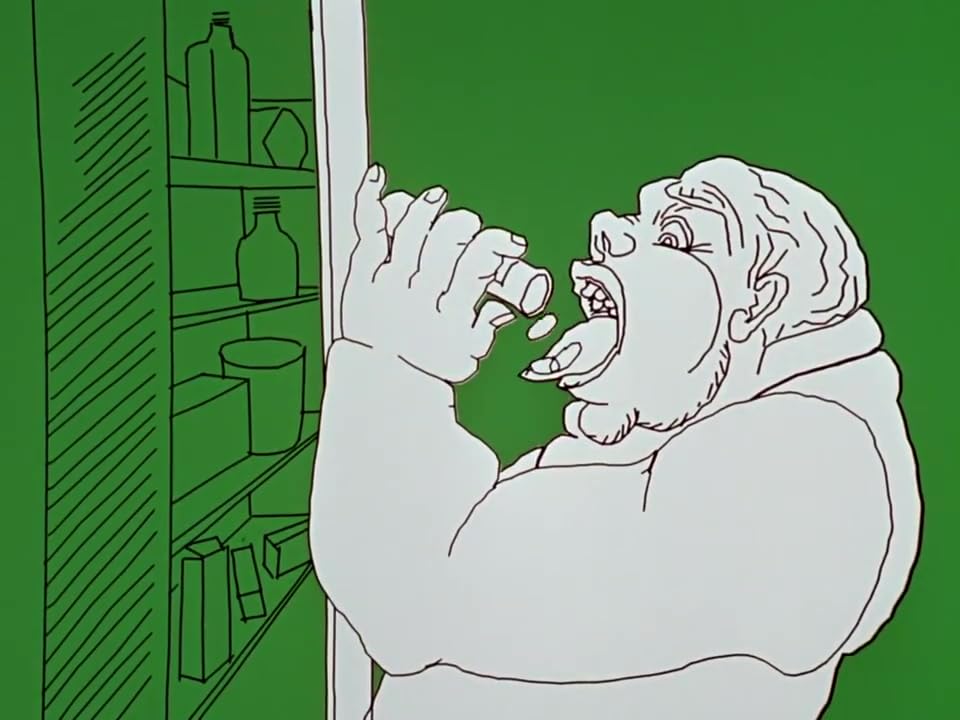
In 1974, the first fully animated computer film, entitled „Hunger“ by Peter Foldes, was created in Canada. It was the first film to use morphing technology. The computer uses interpolation to calculate the missing images between two specified individual images.
Two years later, computer-assisted animation was used in a feature film for the first time: a wireframe hand in the film „Future World“. „Star Wars“ and „Star Trek“ made increasing use of this technology. In 1982, the feature film "Tron" used computer graphics, or CG for short, on a large scale for the first time. Up to this point, this type of moving image still looked very artificial and cold. However, with the development of increasingly sophisticated algorithms for calculating light, shadow, and later also organic forms, and thanks to rapidly advancing computing technology, CG animation became increasingly prevalent in film and television, mostly in the form of increasingly realistic effects, such as computer-generated dinosaurs in „Jurassic Park“ in 1993 or an artificial human made of liquid metal in „Terminator 2“ in 1991.
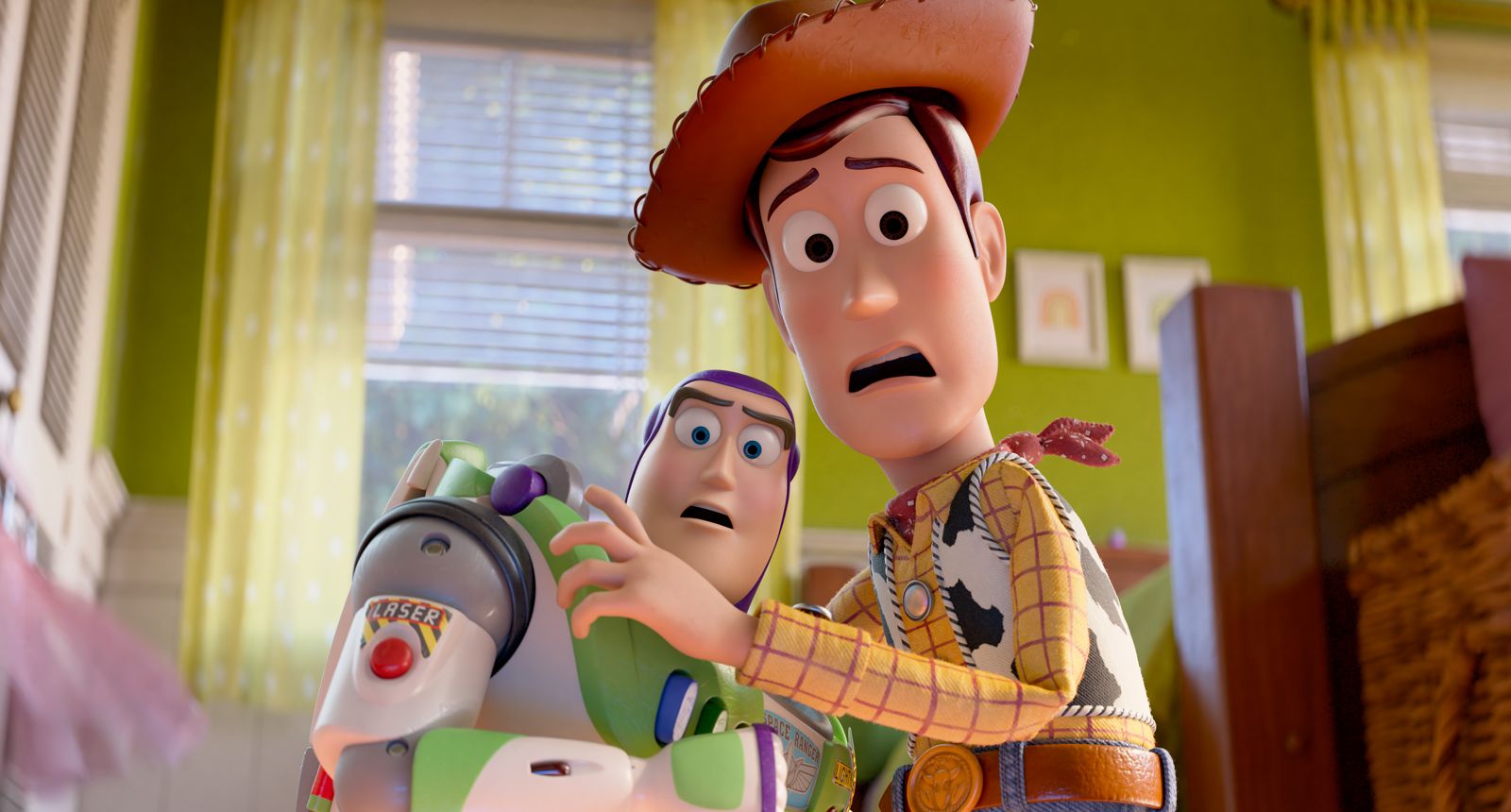
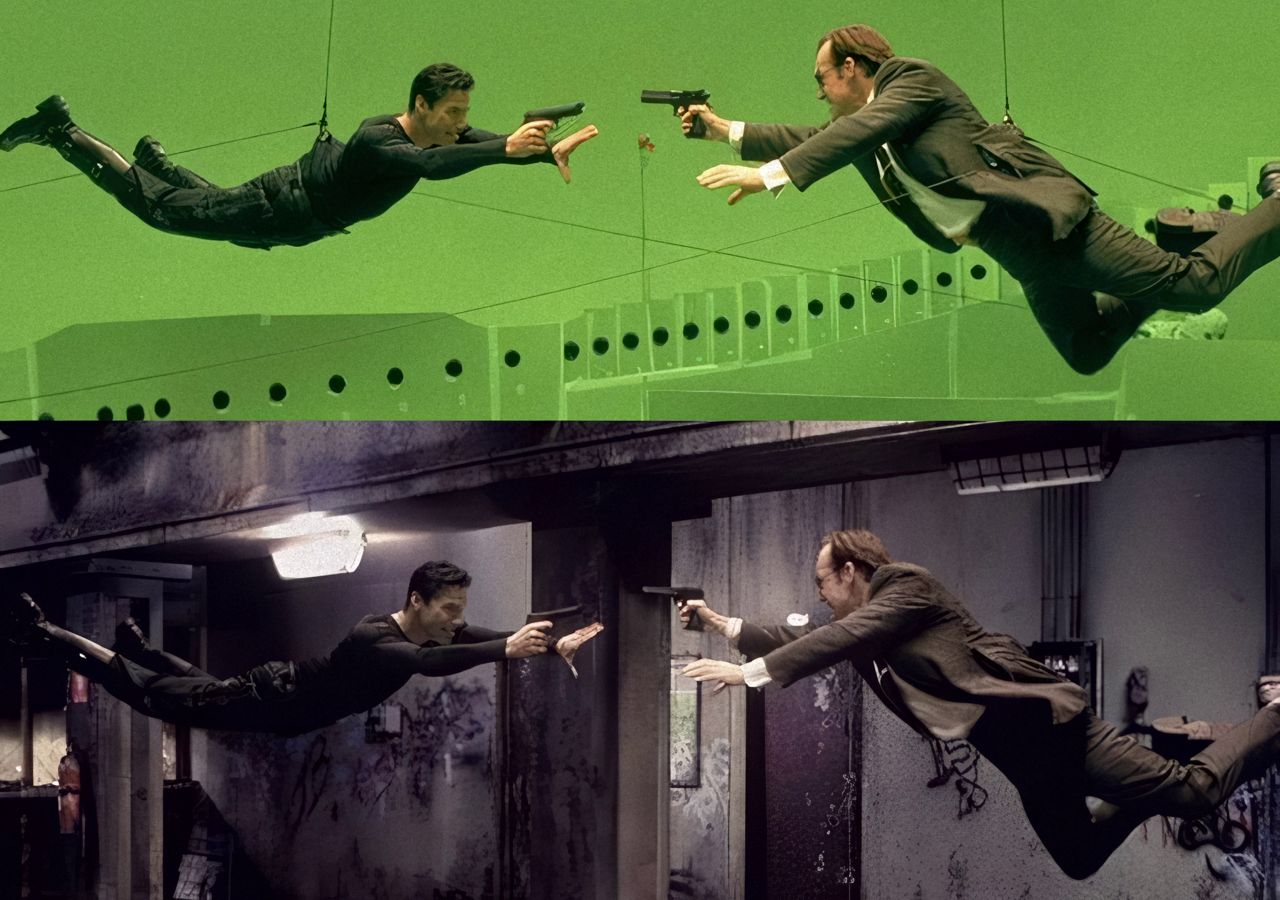
The first movie created entirely on a computer was Pixar's „Toy Story“ in 1995. At the time, rendered objects still looked like plastic. Skin and hair, for example, were too complex for computers to handle. That's why director John Lasseter decided to make a movie with toys, which earned him an Oscar. The latest major achievement in computer graphics is bullet time, an extremely slow slow motion in which lightning-fast movements can be depicted in combination with camera movements, first used in „Matrix“ in 1999. CG has now become an established, integral part of film production. Films from the USA in particular rely on its powerful effects. Fortunately, however, there are still plenty of other film and animated film productions that continue to use classic techniques.
What remains today
The approach used in classic animated films is still completely identical in some respects to today's computer animation techniques. The basis is still a script, which is used to create a storyboard containing at least one drawing for each camera angle and a model sheet, a collection of drawings depicting the gestures and facial expressions of a character in the film. The dialogues are recorded and an exposure sheet is created that lists the sound and images frame by frame. In addition, layouts are created for backgrounds or important objects, such as vehicles, which are passed on to the animator along with the storyboard, model sheet, and exposure sheet.
Using a special light table, the animator now draws the character assigned to them in keyframes for each scene. This means that they only draw the extremes of each movement. For a jump, for example, this would be three frames: tensing, maximum jump height, and landing. All of these drawings are photographed and can then be played back with the appropriate length per frame. The result is then passed on to an inbetweener, who draws the missing intermediate frames. Normally, 12 frames per second (fps) are sufficient, but for fast movements, 24 frames are required to prevent the movement from appearing „jerky“.
In addition to the characters, special effects may also need to be animated, such as wind, rain, fire, or breaking waves. These drawings are then transferred to film by a colorist using ink and colored in on the back. Each film has a hole punched in it to prevent them from slipping. The backgrounds are usually painted with brushes and paint, contrasting with the flat-looking characters. It is important that the lighting is exactly the same for the background and the animated character. These are then combined under the camera and finally photographed.
Sources
- Reinhold Erich Thiel, „Puppen und Zeichenfilm oder Walt Disney aufsässige Erben“, 1960, Rembrand Verlag GmbH, Berlin
- Michael Itschert, „Der deutsche Animationsfilm von den Anfängen bis zur Gegenwart“, 2003, Gardetz! Verlag, Sankt Augustin
- J. Halas, B. Privett, „Gezeichnete Filme“, 1957, Knapp Verlag, Düsseldorf
- Hans Dieter Ehrlinger, „Handbuch Kinderfernsehen“, 1998, UVK Medien, Konstanz
- Lea Treese, „Go East – Zum Boom japanischer Mangas und Animes in Deutschland“, 2006, LIT Verlag, Berlin
- Jean-Pierre Moulin & Yvan Dalain, „Eintritt frei – Zeichentrickfilm“, 1963, Editions Rencontre, Lausanne
