Rendering and Compositing
- 10 June 2026
- 5 min read
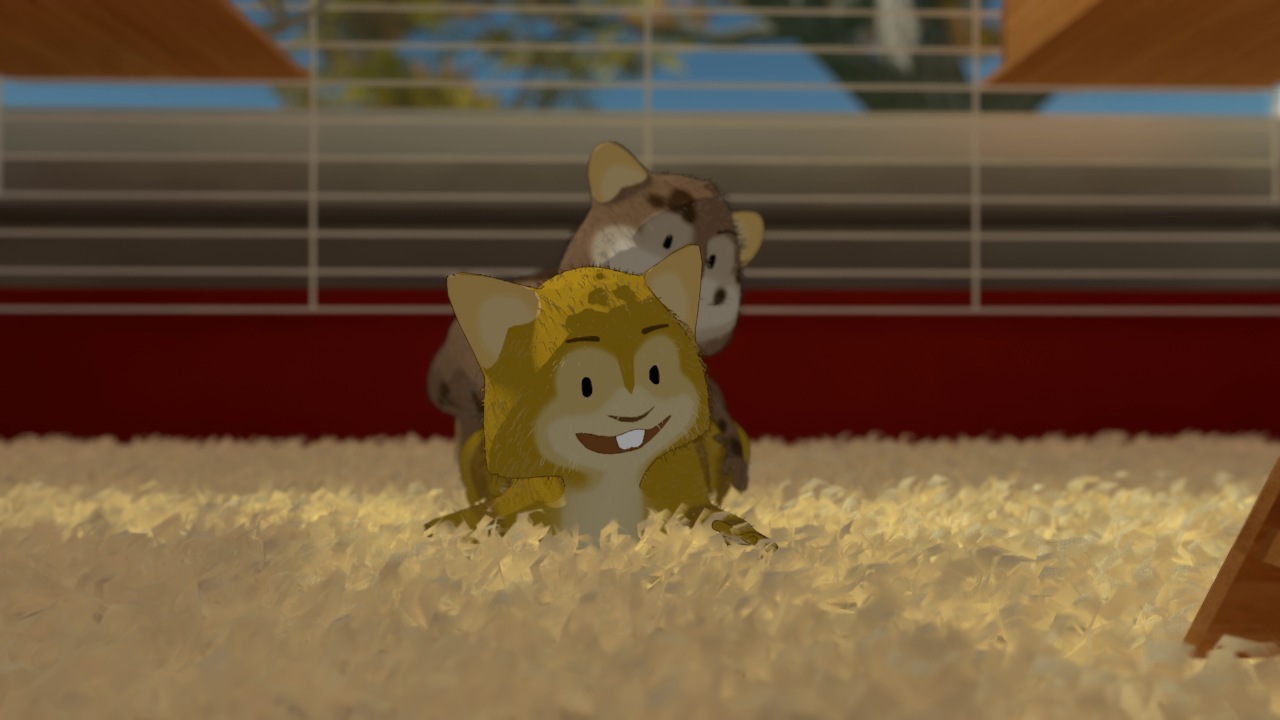
It’s worth mentioning here that the film was rendered twice. This is because we refined the visual details of Ralle and Bolle with each new version. Here’s a side-by-side comparison:
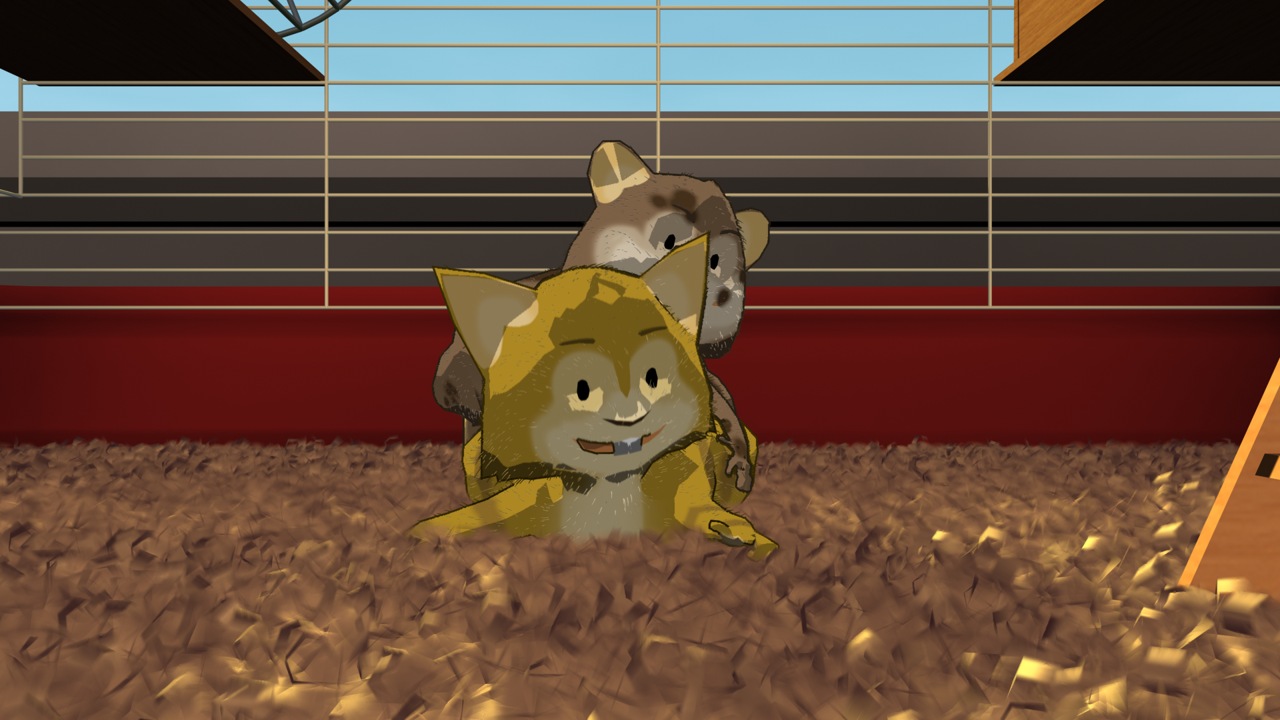
The 2008 version
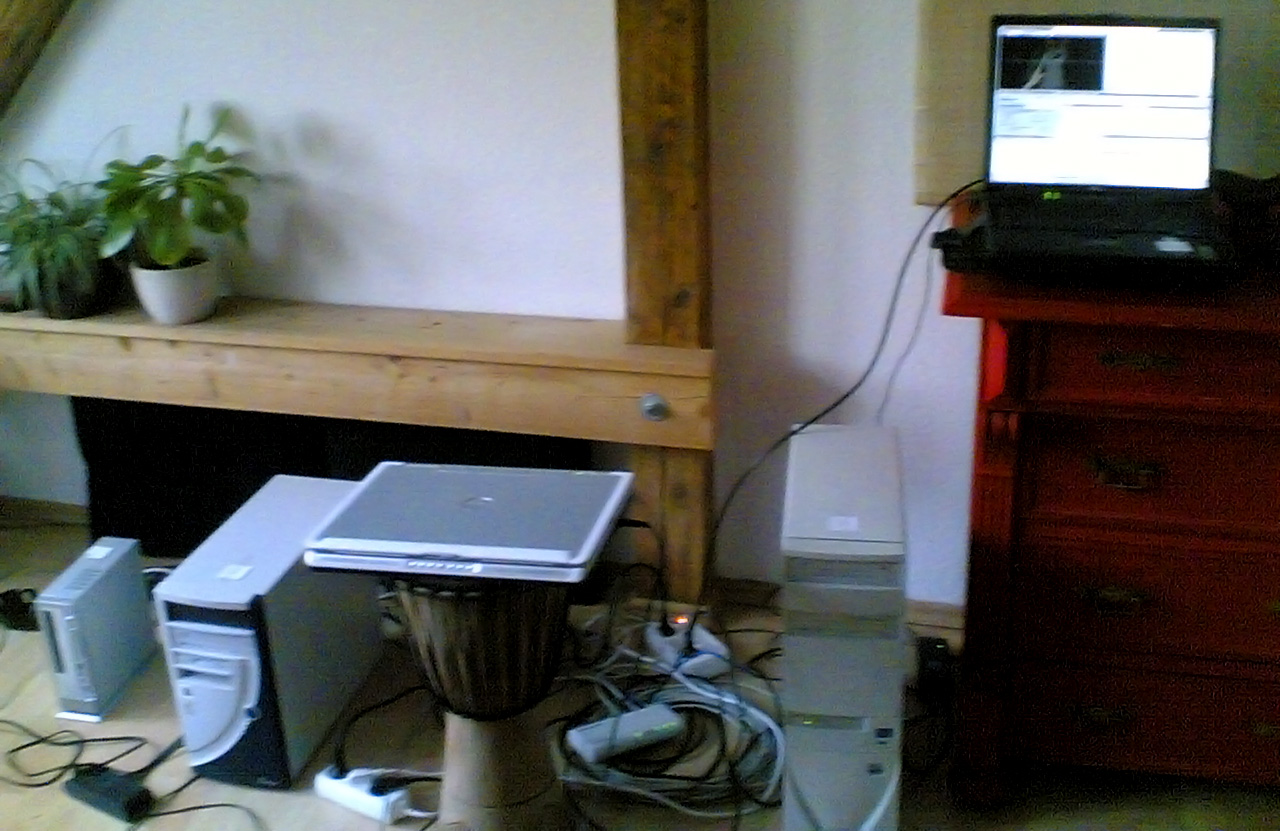
The entire project was scheduled to be completed in six months. This left little time for rendering. The first version was therefore created using 3ds Max’s basic scanline renderer. In addition to the time constraints, the limited processing power of PCs at the time also severely limited the final result - a challenge we attempted to overcome by setting up a homemade render farm using a mix of borrowed and our own PCs.
The calculations for light and shadow were kept extremely simple. Global Illumination (GI) and radiosity were out of the question. Our hamsters are also much rougher in terms of their geometry. We also chose not to do any post-production compositing. As a result, the first version lacks depth of field, for example. Only a bit of motion blur was added later, directly from 3ds Max.
The 2016 version
Global Illumination
We were now able to render the second version without any time constraints. This is where V-Ray came into play - a significantly more powerful renderer with several robust solutions for GI. We opted for the approach in which the entire lighting setup is captured once per shot in an irradiance map, and all images from that camera angle are rendered using it. This allowed the image quality to benefit from highly precise, flicker-free GI. At the same time, we didn’t have to recalculate this computationally intensive process for every single image.
Multiple render channels
In addition, there is the option to save multiple channels of the rendered image:
- the smooth rendering with correct lighting on the geometry (top left)
- a map containing depth information - the depth map (top right)
- a map showing the motion vectors - the velocity map (bottom left)
- a map containing different material IDs (bottom right)
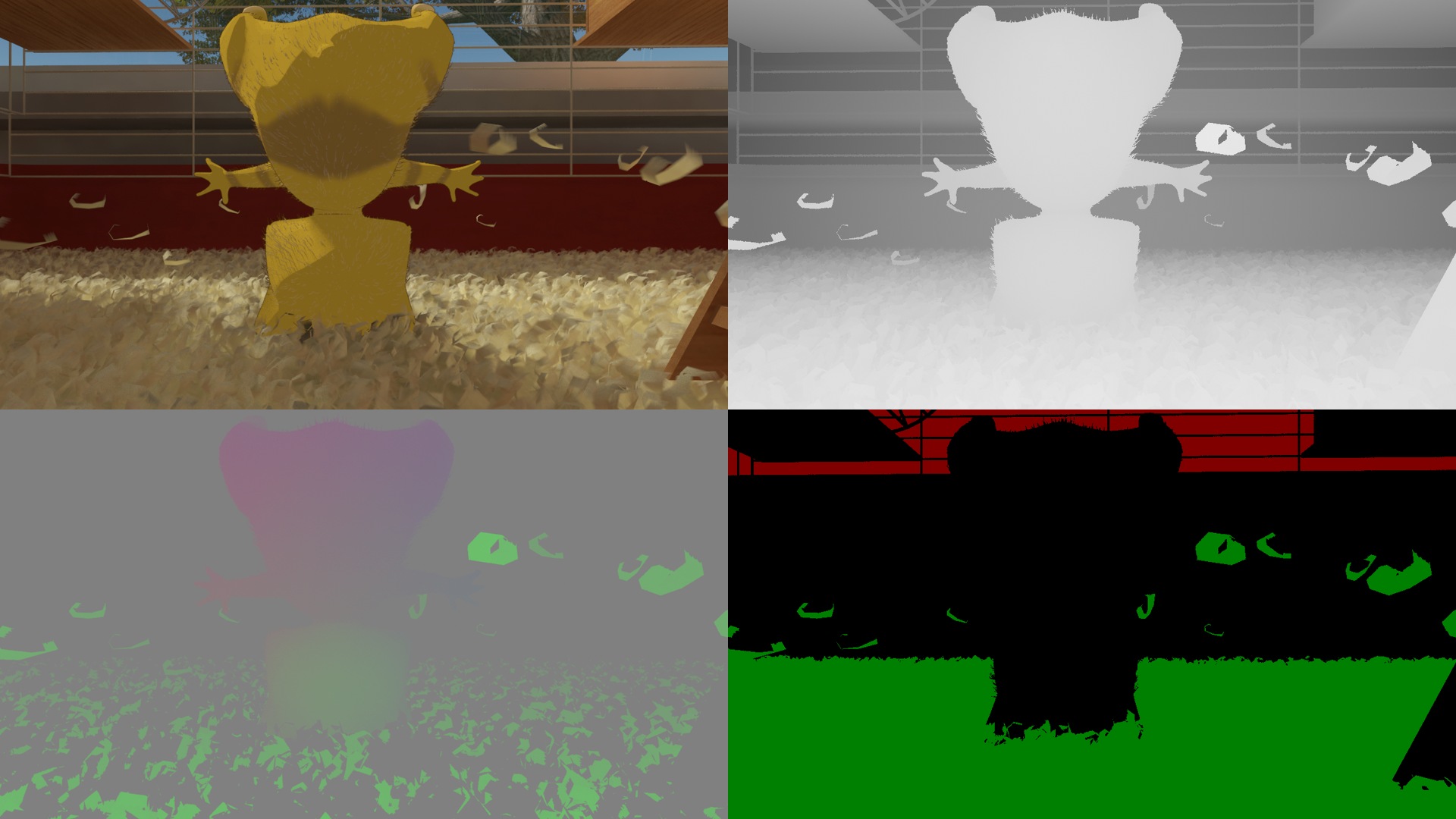
This allows us to add depth of field and motion blur to the first image in a compositing program like Fusion. If we had rendered these effects in V-Ray itself, the render times would have skyrocketed. The Material IDs also allow for specific color corrections to be applied to separate parts of the image. Once this setup is properly configured, all settings can be applied and finalized one after another. Here is the final image from the top four:
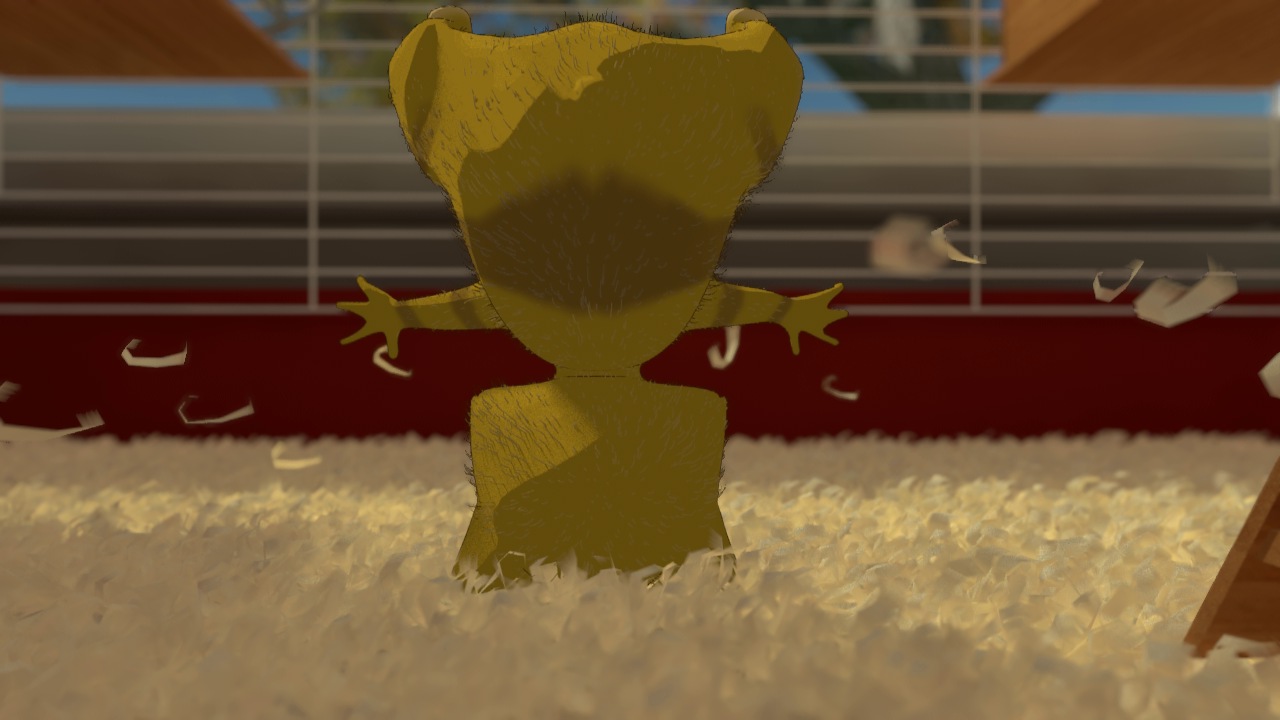
The depth of field is particularly noticeable in the tree in the background. We also adjusted the colors of the leaf litter. We used motion blur sparingly to avoid creating overly blurry images - a choice that reflects our personal taste.
Rendering Ralle & Bolle in Blender 2026
Although V-Ray is now available as a free download for Blender, we optimized the world of the two hamsters in Blender using Eevee. On the one hand, to save a massive amount of rendering time. The Eevee engine is incredibly fast and makes optimal use of today’s high-performance GPUs. At the same time, this workflow allows for real-time feedback in the viewport. This means changes to lighting, animations, or scene redesigns can be implemented without intermediate rendering. A massive advantage thanks to this fantastic software.
This also eliminates the need for compositing. That’s because Eevee can calculate both depth of field and motion blur directly. However, this doesn’t work in real time. So if you give Blender a few seconds per frame, today’s rendered images are produced in a fraction of the time it used to take - back when five minutes per frame was the norm just ten years ago.
Even though this process is rather technical and demanding, it remains a fascinating subject to me. Looking back, it’s always interesting to see how 3D animation continues to evolve. At the same time, new opportunities are constantly emerging to explore new paths and try out new approaches.
