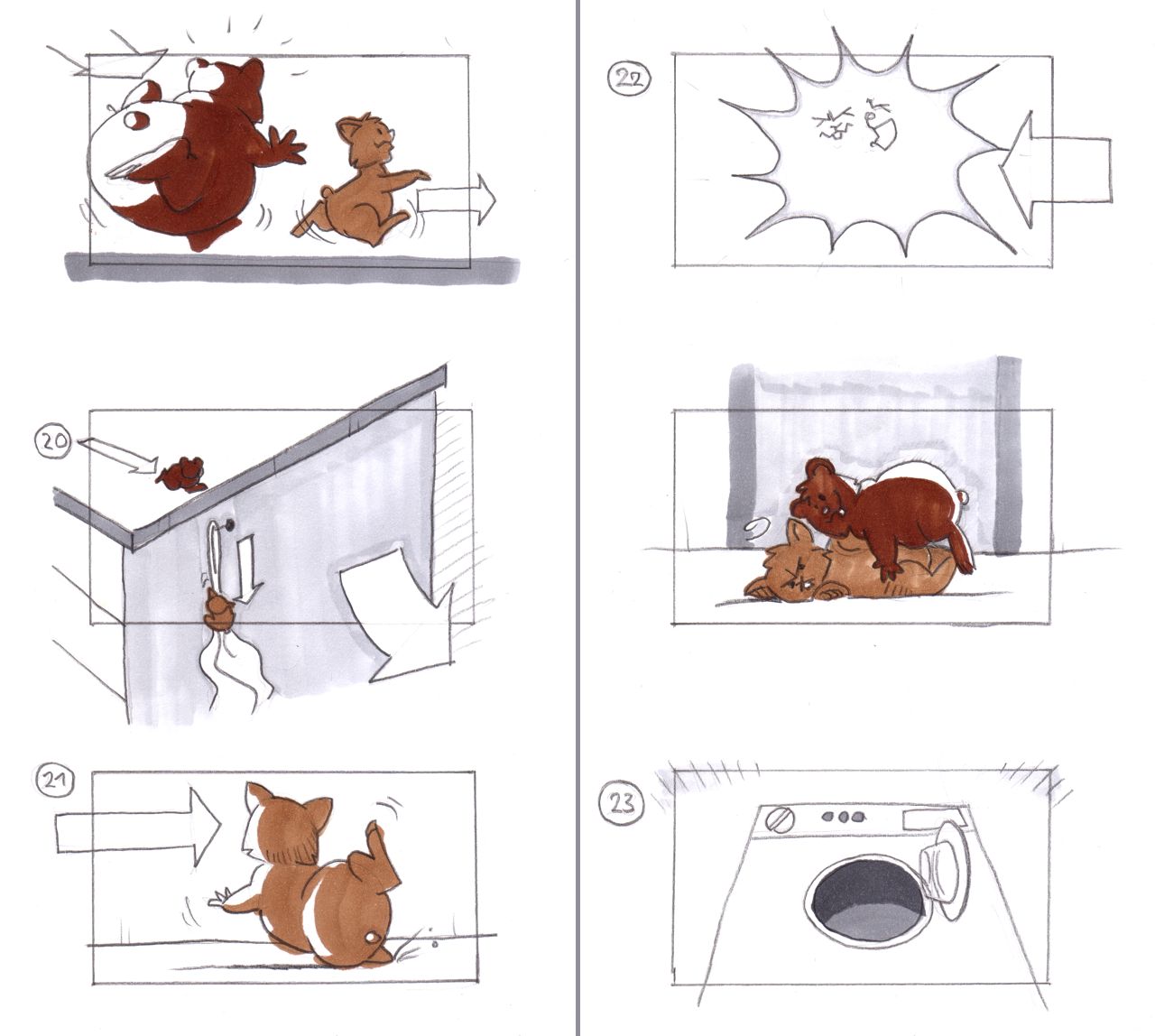
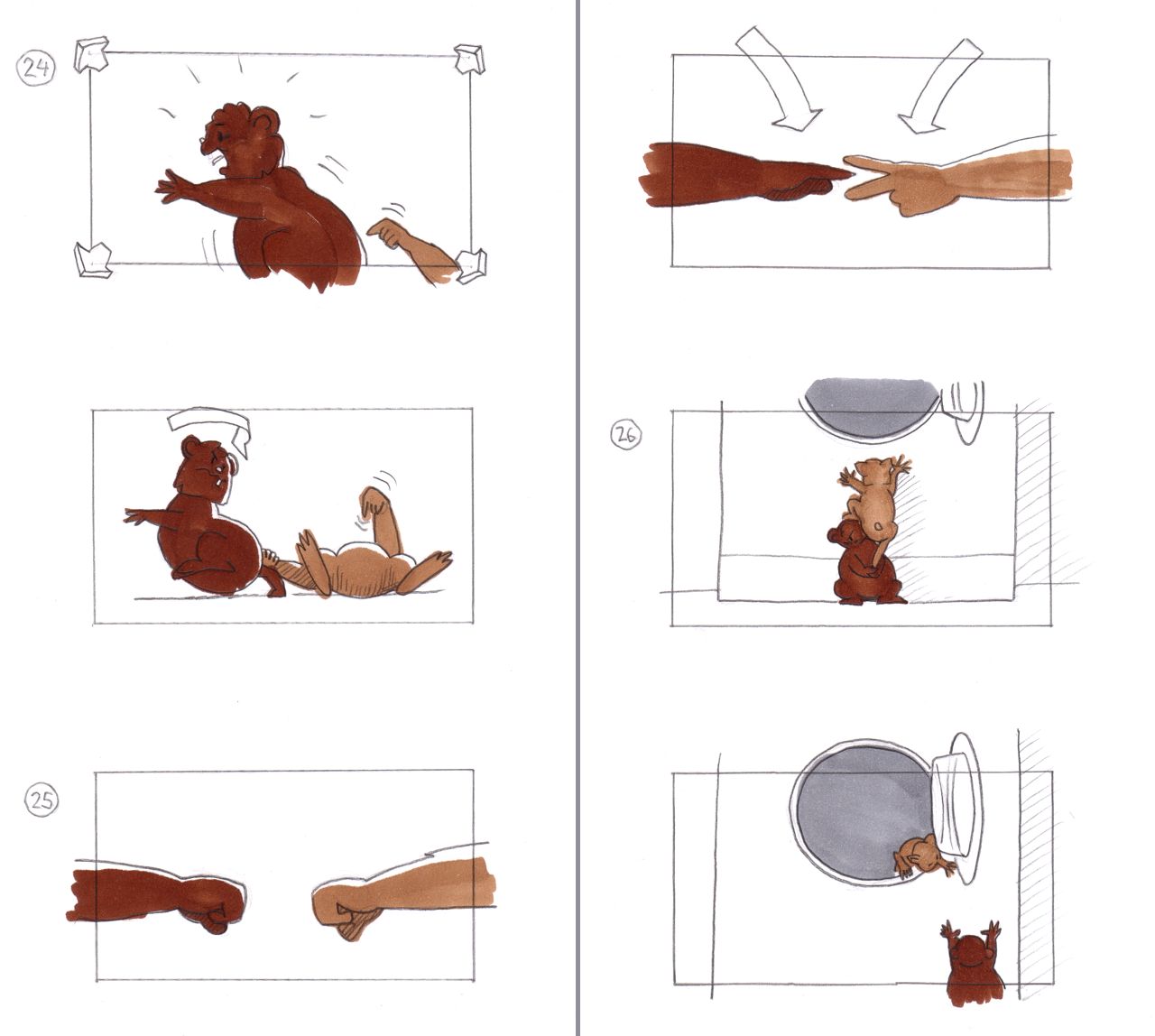
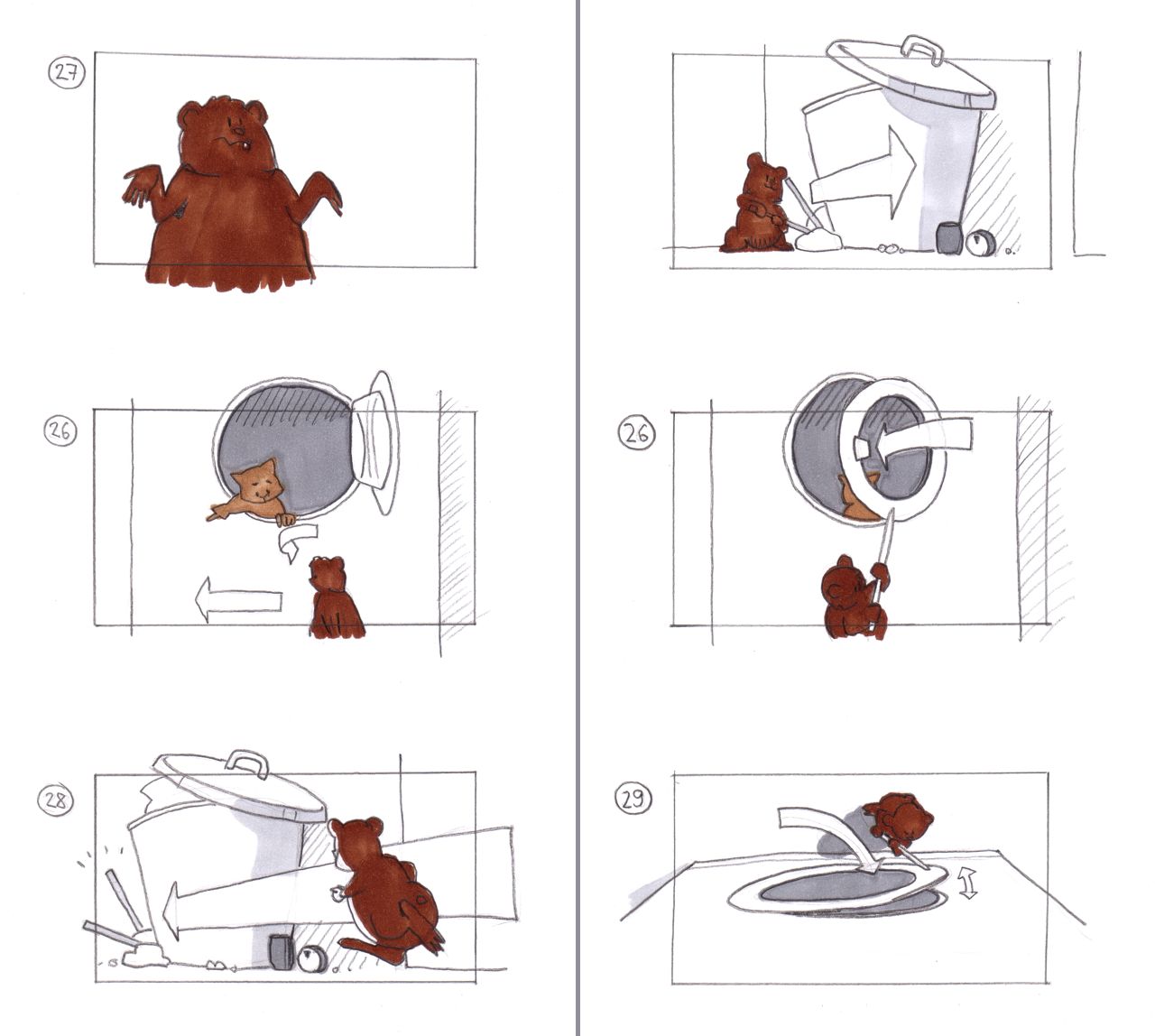
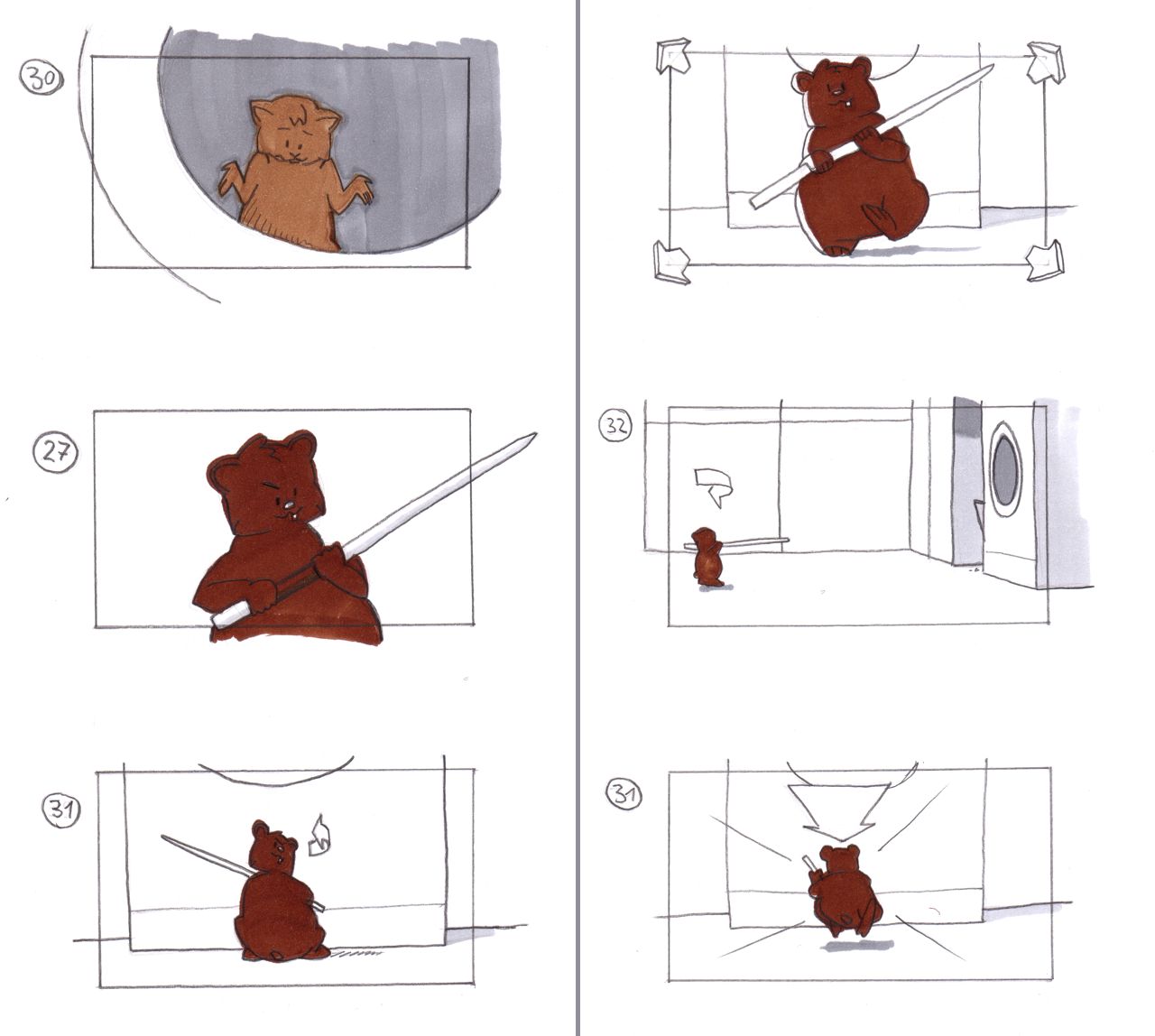
From the idea to the storyboard
- 24 March 2026
- 5 min read

However, the hamster remains the undisputed star of the hamster wheel. But how on earth would a hamster get into the washing machine? It’s not something a hamster could manage on its own. A hamster and its friends could visit a fairground where, among other attractions, there’s a modified washing machine. But a bustling fairground seemed too complicated to me.
The story was supposed to begin in the protagonist’s own cage with an exercise wheel, so that his motivation could be established. I decided on a kitchen with a washing machine - with a front-loading door, of course.
The idea behind Ralle & Bolle
The story was easier to tell with two hamsters: Ralle and Bolle. This allowed me to pack all the information for the viewer into the interaction between the two. For example, I showed just how much they love their wheel by having them fight over it. To achieve this, it made sense to give them different personalities—firstly so the viewer could tell them apart, but more importantly, so the characters could play off each other through their contrasts.
I decided not to include dialogue, as it would have felt artificial but wasn't strictly necessary. Conveying everything through gestures and facial expressions better suited the animal-like nature of the two characters and the story's relatively simple structure. Communication in film doesn't necessarily require spoken words, as the silent film era has repeatedly demonstrated. I saw this as an additional challenge.
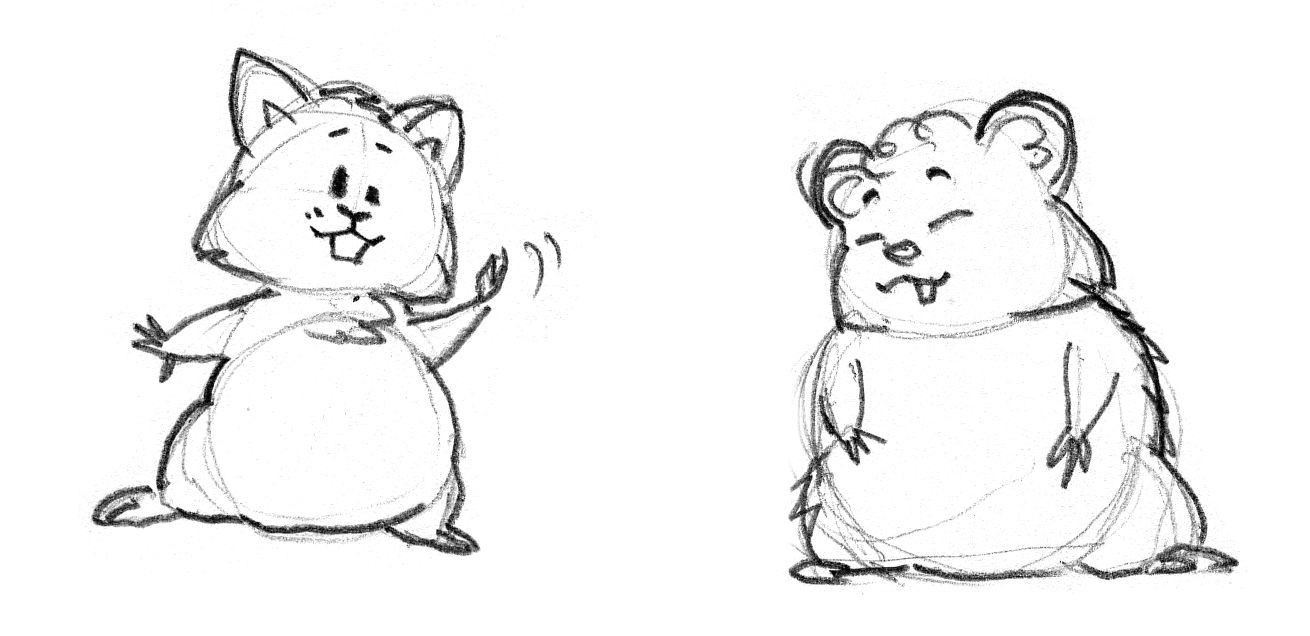
Driven by a sense of playfulness, the two do their best to get the machine running. For some logical questions like „How would they know how to operate a washing machine?“ or „Do washing machines work without water?“, I deliberately avoided complicated explanations, since the whole story is more fantastical than realistic. At the climax of the story, everything seems to be working, but then the machine goes out of control: spin cycle!
Ultimately, it’s the same old story of trying things out—whether they’re forbidden or not—and learning from one’s own mistakes. The target audience is children aged three to eight, an age when they explore their surroundings and try to find their own path.
To ensure the story could unfold, I threw several obstacles in the hamsters’ path. They had to work hard to achieve their goal. First, there was the struggle to escape the cage; then Bolle got stuck on the faucet; and finally, they faced problems with the stubborn washing machine door. Another key recurring element is their quarrelsome nature, which further hinders their ability to succeed together. Overcoming these obstacles has already shaped their most defining traits. Since Ralle tends to take a passive role in the washing machine during the second half of the story, his role is the more dominant one in the first half. This created a balance between the two characters. Bolle’s somewhat passive nature shifts as he develops an interest in the object of their pursuit. He takes charge of carrying out their joint plan thanks to his loyal yet naive nature.
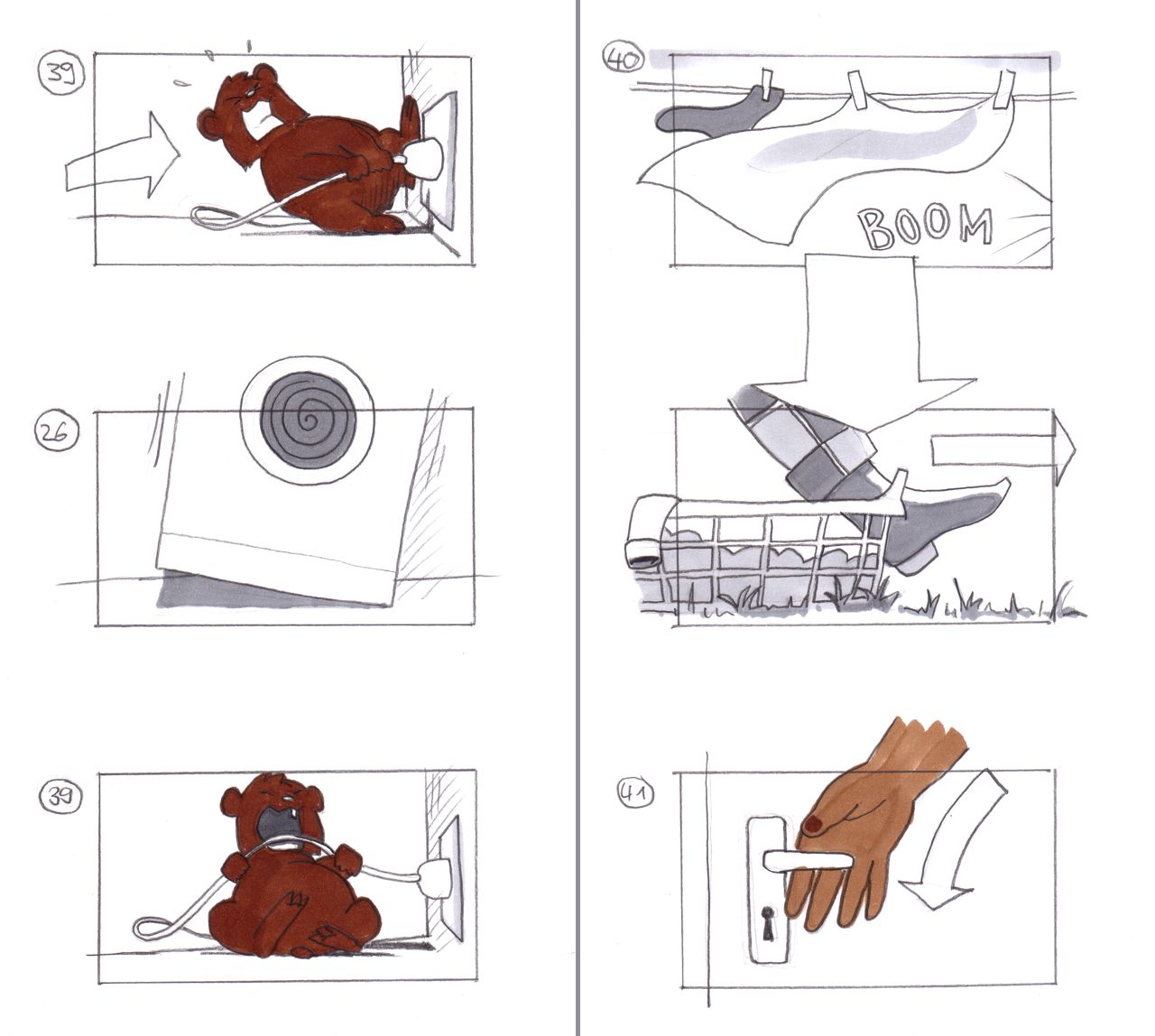
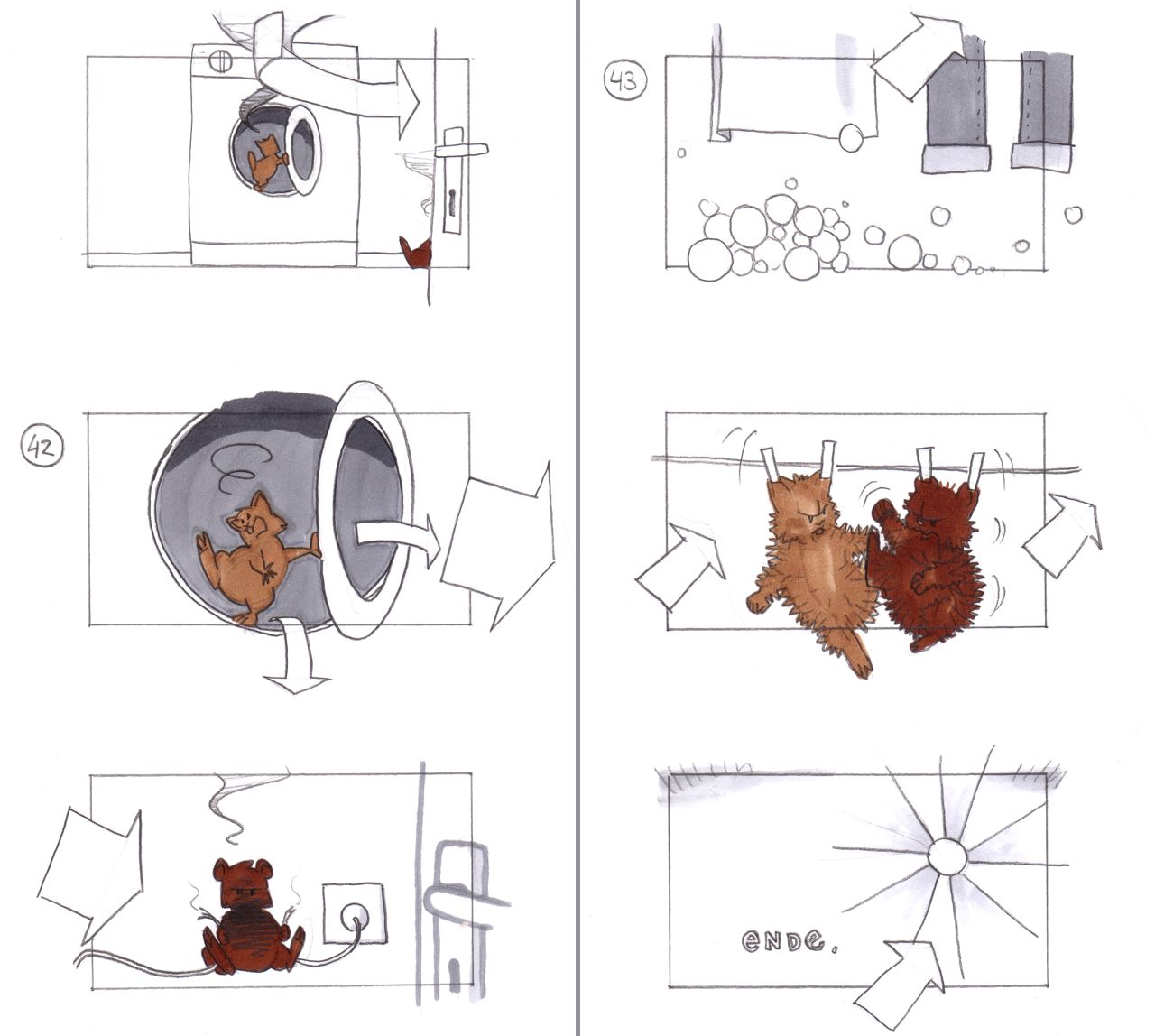
In my first draft of the story, it was the housewife who made the washing machine stop. She unplugged it and washed the hamsters as punishment. However, this caused the built-up tension to collapse without a punchline. But it had to be released somehow. So I had Bolle take matters into his own hands and do exactly the wrong thing: bite through the power cord. To delay the punchline a bit further, I transferred the effect of the bang to the outdoor set, as the laundry is swept up as if by a shock wave.
The soap bubble scene symbolizes another wash cycle, the effects of which become visible immediately afterward. To help the washed hamsters on the clothesline explain themselves better, I set this scene at night. This creates a time jump that justifies the repair of the power cable and further emphasizes that they are serving their punishment. Furthermore, the circle closes again, and as you watch, you get the feeling that the story has come to an end.
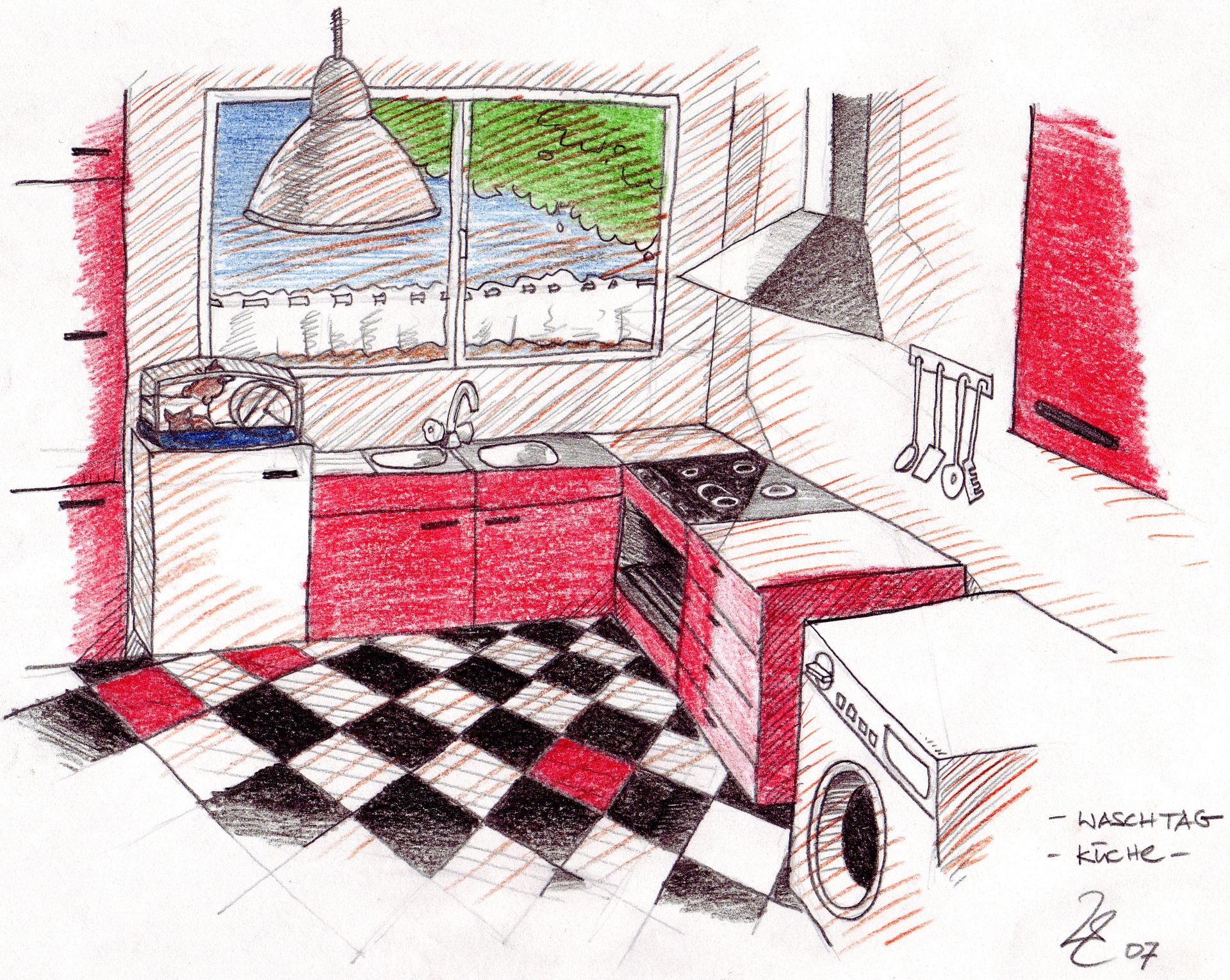
I had a rough idea of the kitchen in my head. There were three requirements the floor plan had to meet: The washing machine had to be clearly visible from the cage, the hamsters needed a way to get to it, and it had to be located across from the door so that, in the penultimate shot, the subjective camera angle could be directed straight from the door toward the washing machine with the hamsters. After sketching it out, I created the final model on the computer.
But once the modeling was done, it was time for animation, which required a finished storyboard. I had to go back to pen and paper. This time, I was able to draw on the ideas I’d gathered while modeling and translate the story into better visuals. In the design process, one thought leads to another; I had a better start, and as a result, a more successful outcome.
The Storyboard
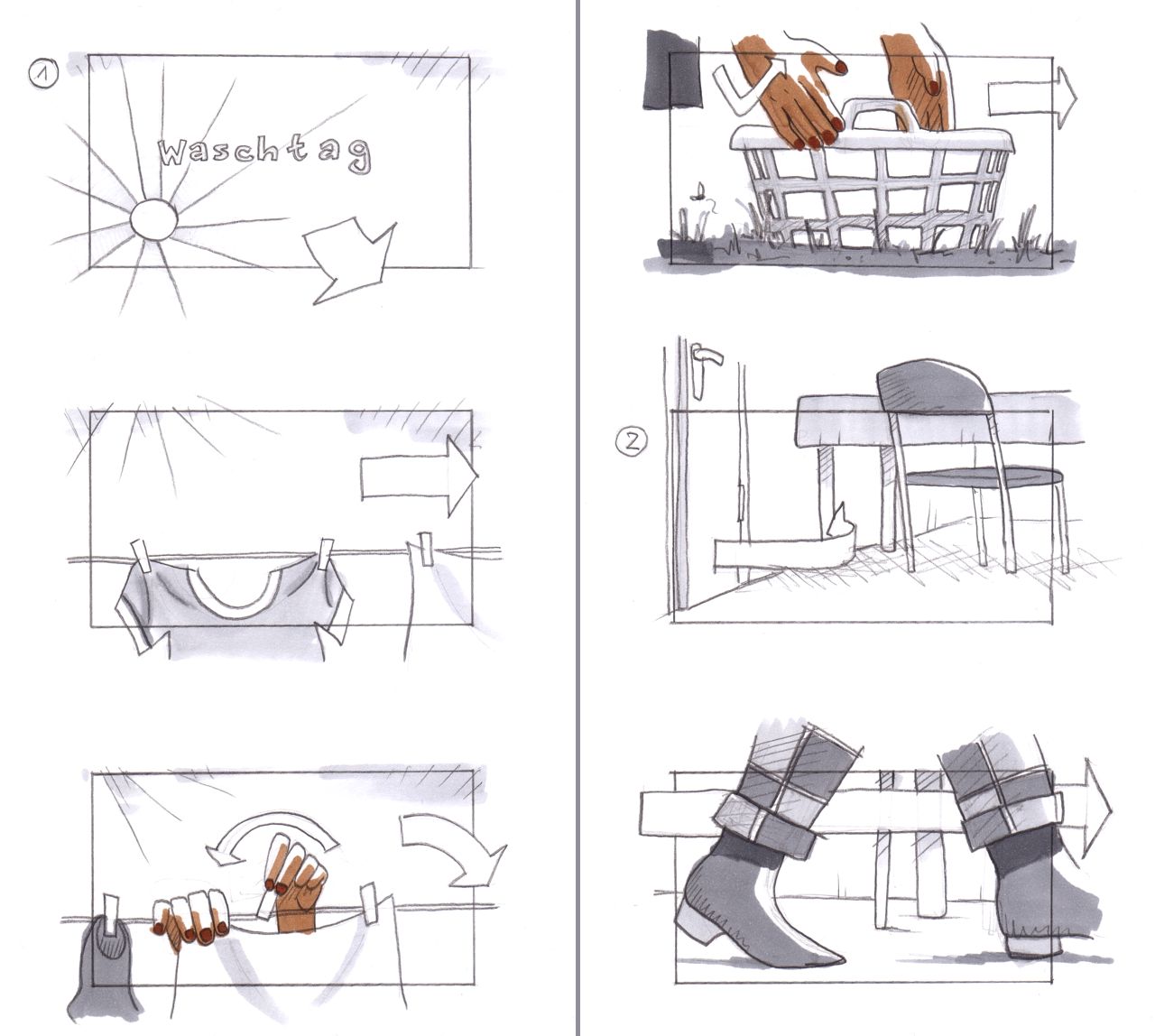
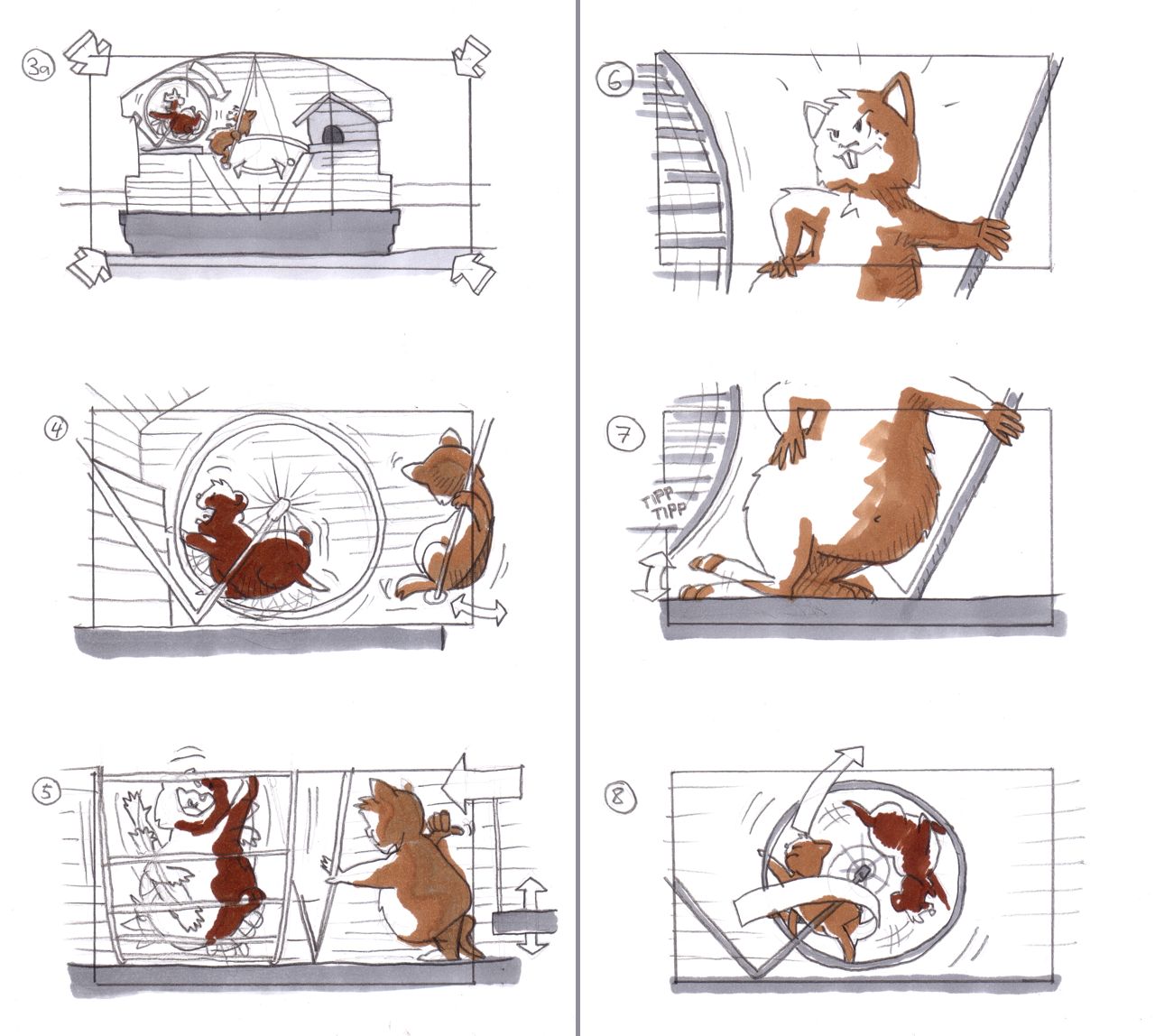
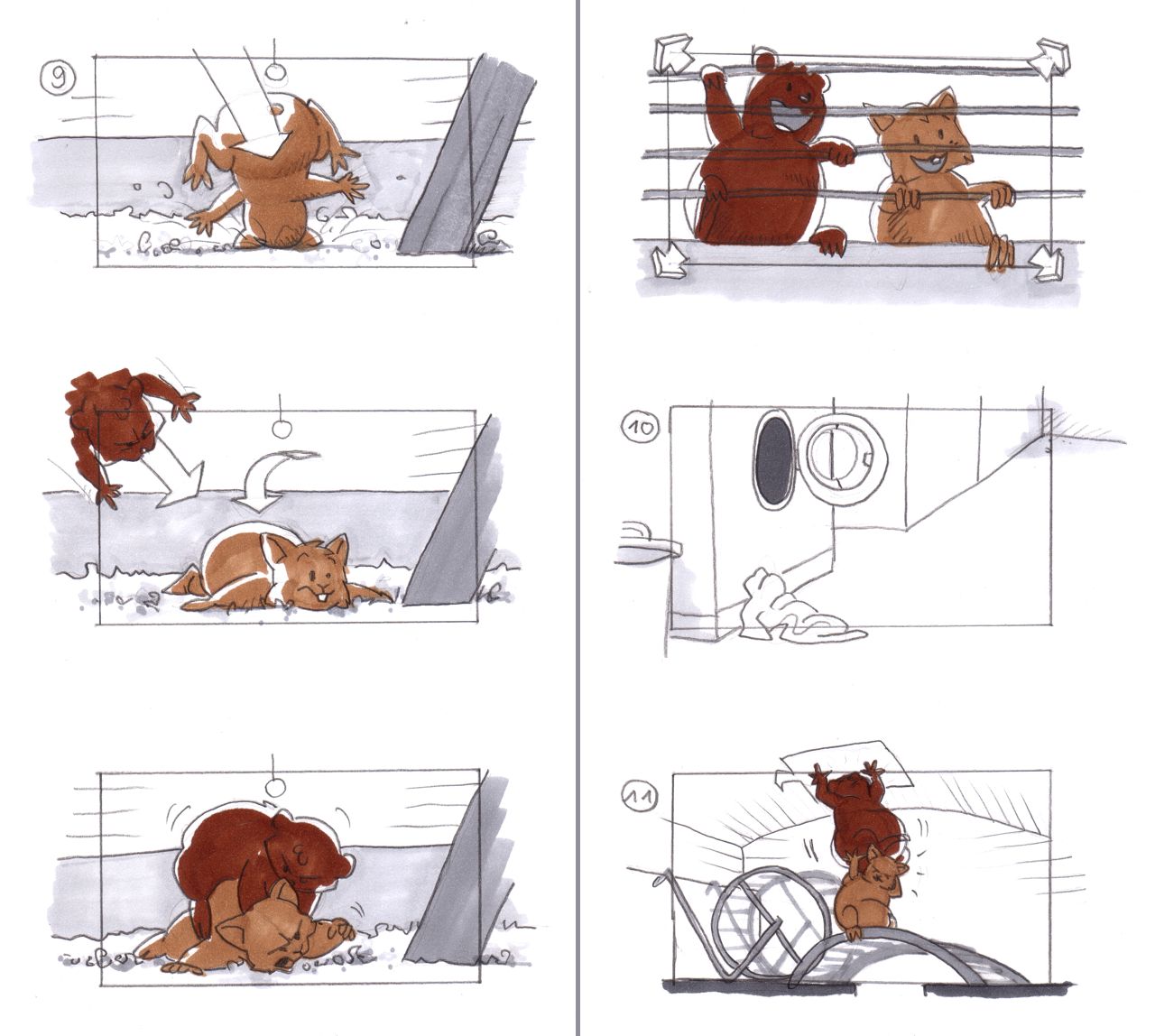
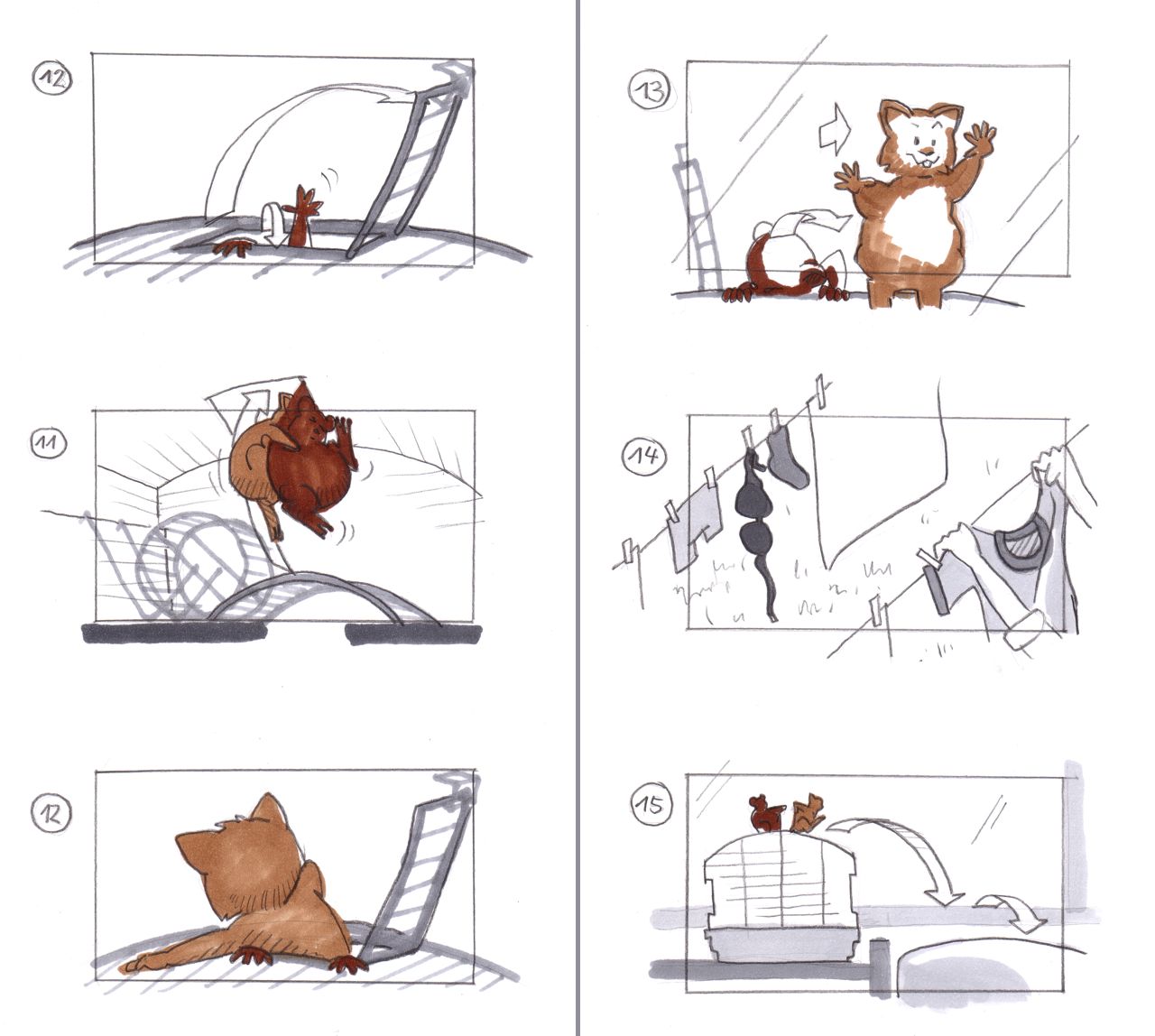
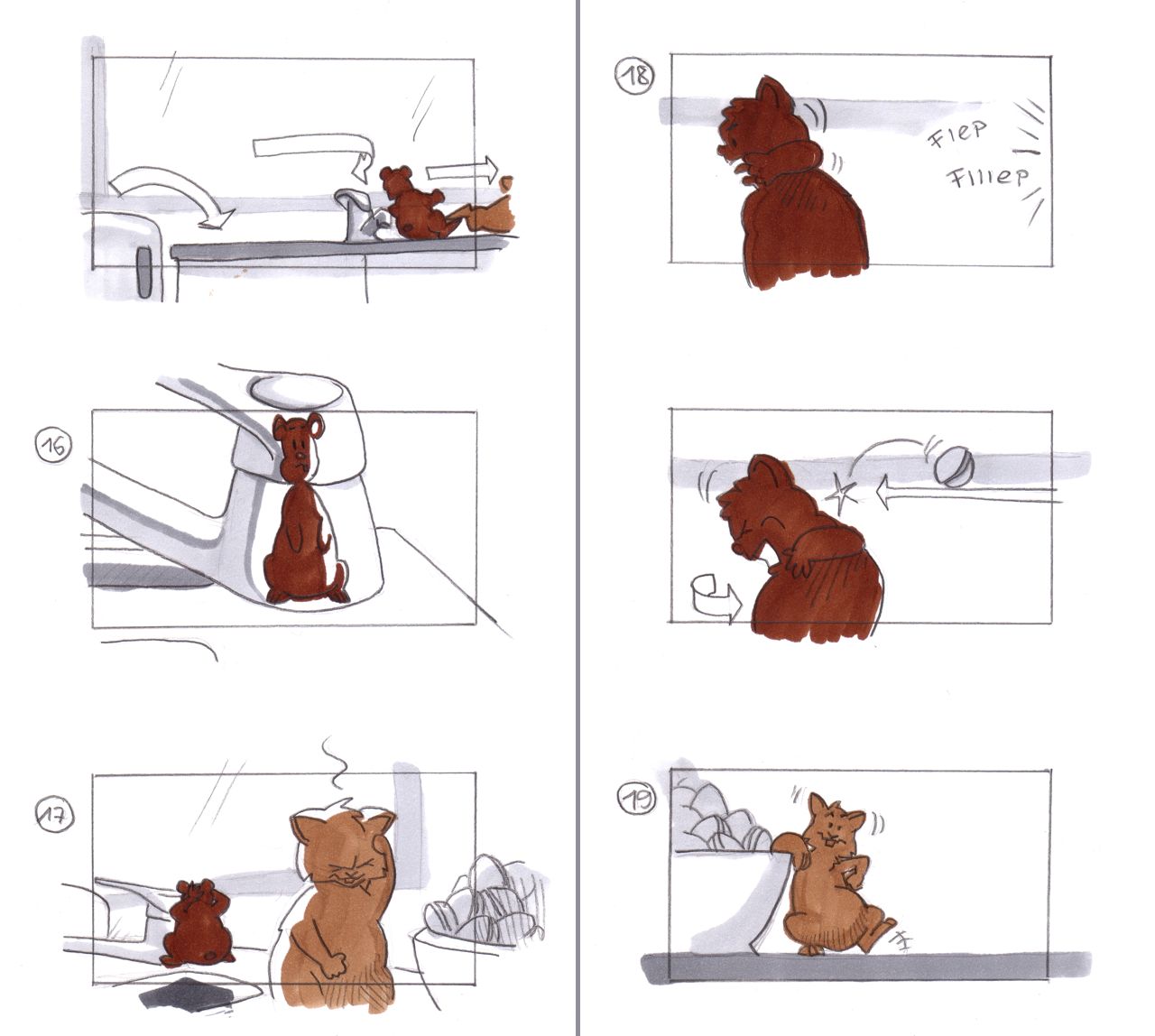
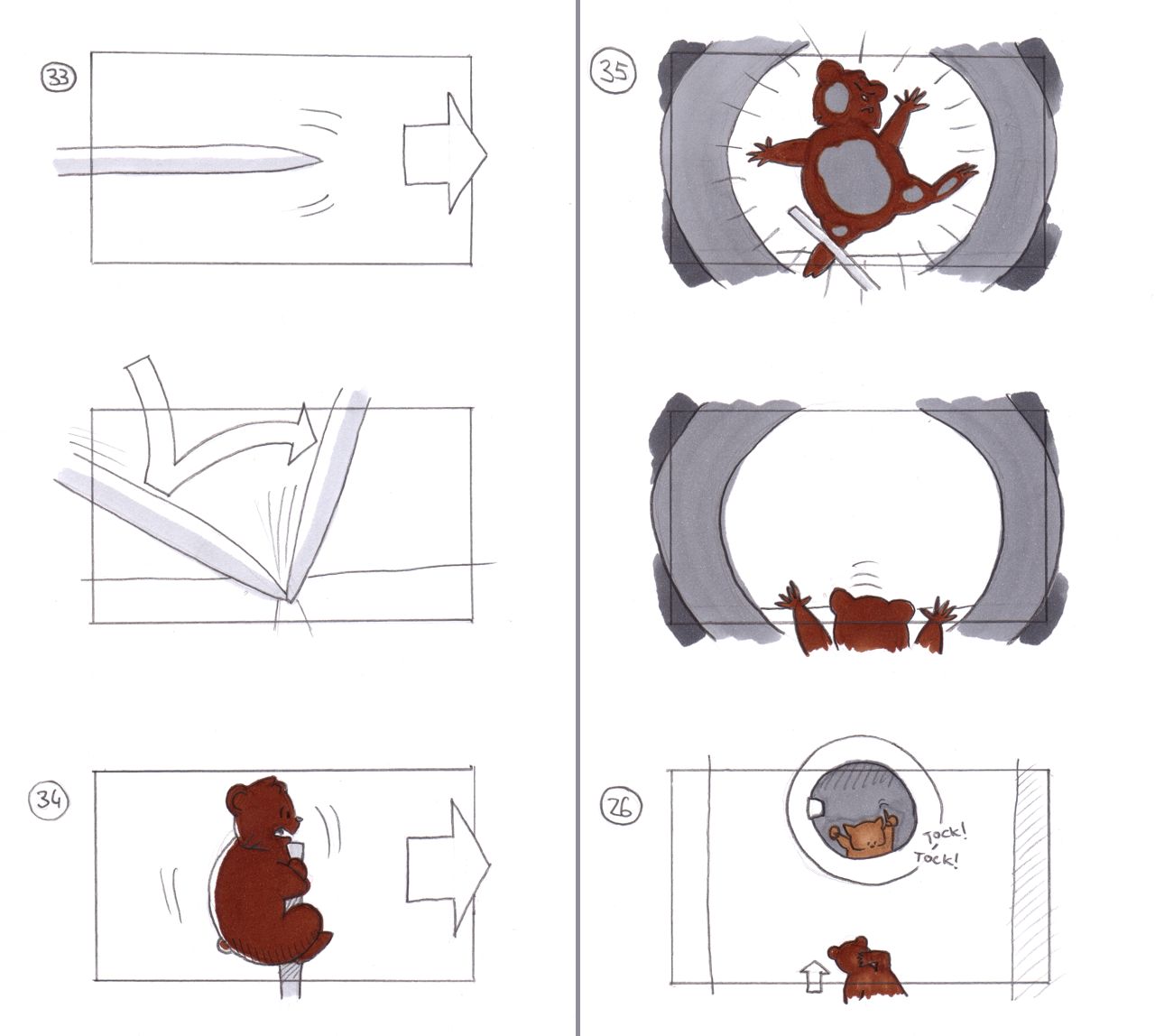
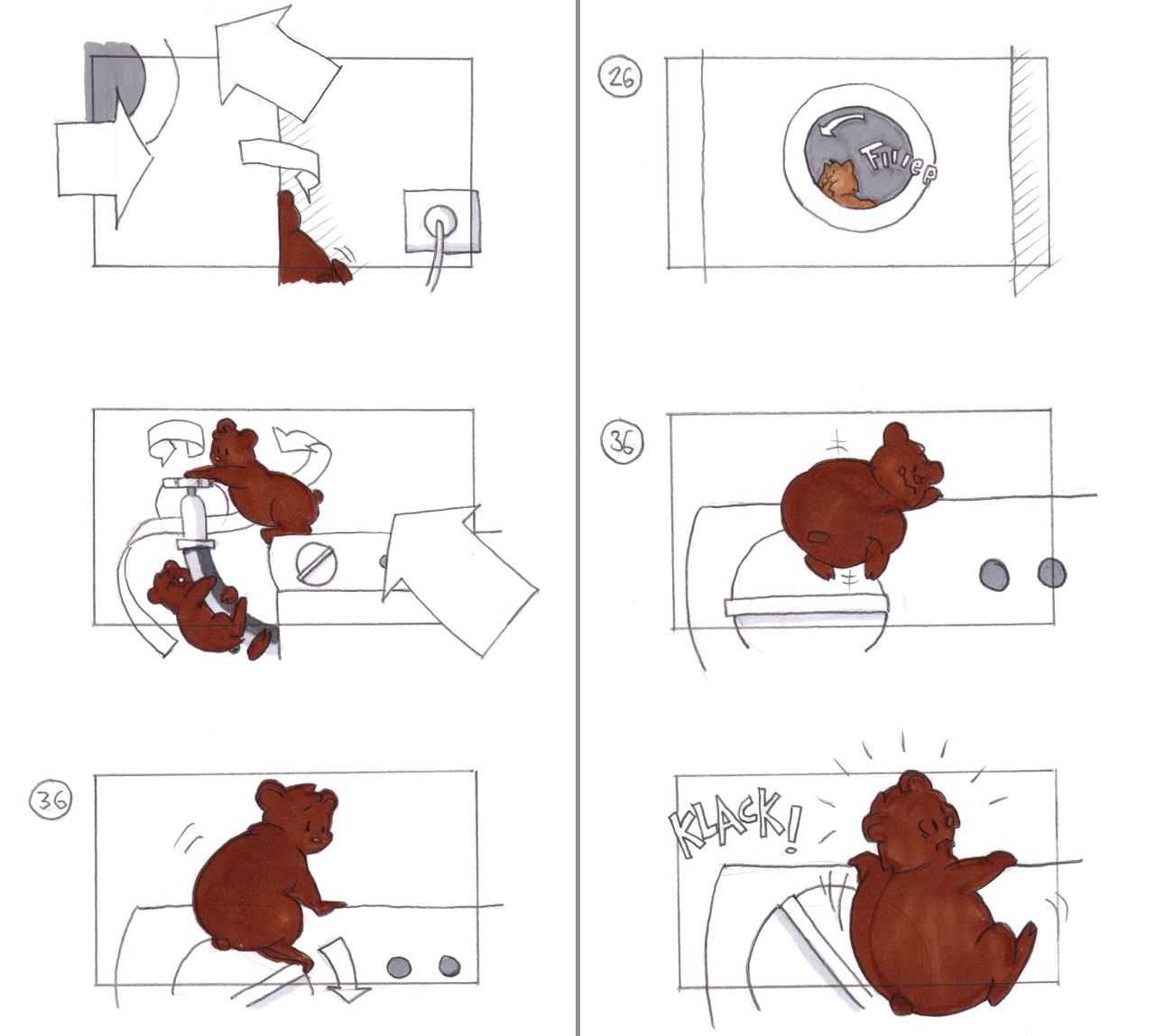
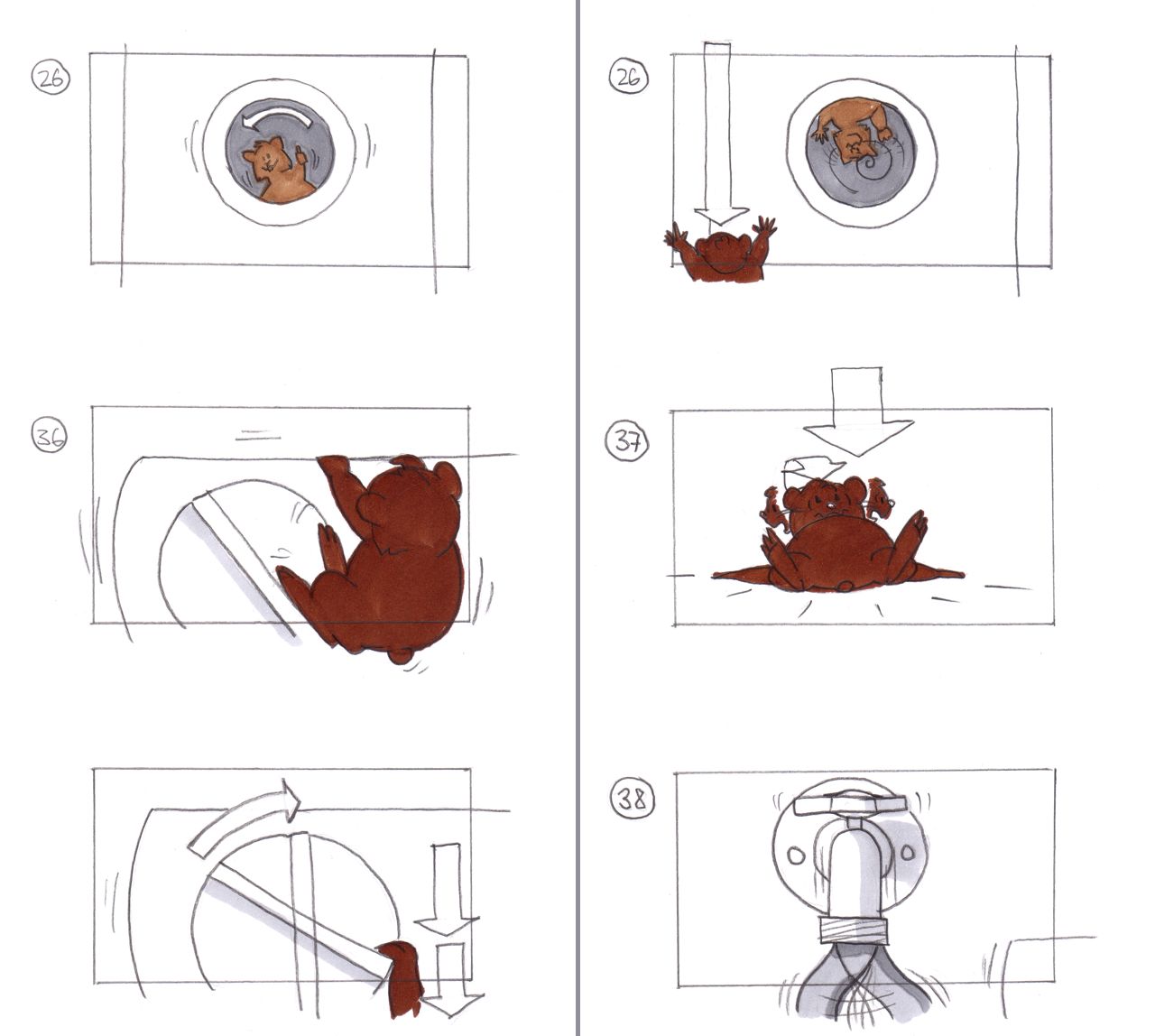
Once the characters and setting had been finalized, I began breaking the story down into individual sequences, then further into individual shots, and sketching them out. The resulting storyboard essentially provided as detailed a preview as possible of the finished film, shot by shot, including all movements within the frame, much like a comic book.
That was important for the animation because it defined all the motion sequences and their level of detail, allowing me to avoid any movements outside the frame. In fact, in animated films, the storyboard serves as the sole foundation before anything else can be created, since everything is only available virtually and the idea initially exists only in one’s head.
I treated the storyboard as the first complete narrative of the story, into which many elements were only incorporated during the rough sketching phase—for example, the interlude with the faucet. When I first attempted the storyboard, I hadn’t yet created a model of the kitchen, which is why I was less satisfied with the result. The resolution was too simple, everything happened way too fast, there was no interplay between perspective shifts, and even while sketching, I had the feeling that watching it wouldn’t be fun. Still, drawing this storyboard on paper helped me make room for new ideas. I set it aside for a while and started by modeling the hamsters and the kitchen. This first storyboard helped me keep track of the details.