Watch Ralle & Bolle with 3D glasses
- 30 April 2026
- Project duration 20 min

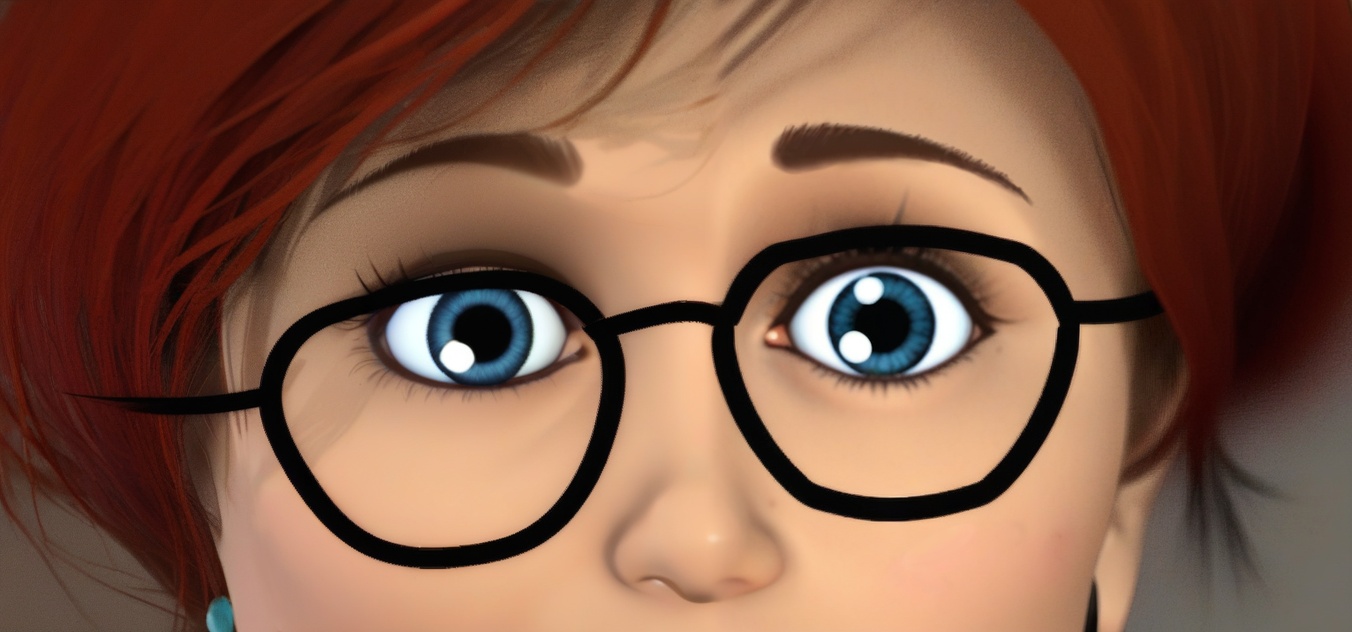
How does stereoscopic vision actually work?
The fact that nearly all sighted animals have two eyes is likely due in part to the fact that spatial orientation is a vital survival advantage that has prevailed through evolution - we are much better able to intuitively assess our surroundings in three dimensions.
But what does that have to do with movies?
As a filmmaker, I want to go beyond the image - motion is what sets film apart from photography and painting. But film can do even more. It can transform the screen into a real window into another world, one that feels as though you can look right into it and from which things can emerge. If the window is large enough, we as viewers become part of this fantastical other world.
So how does this feeling arise?
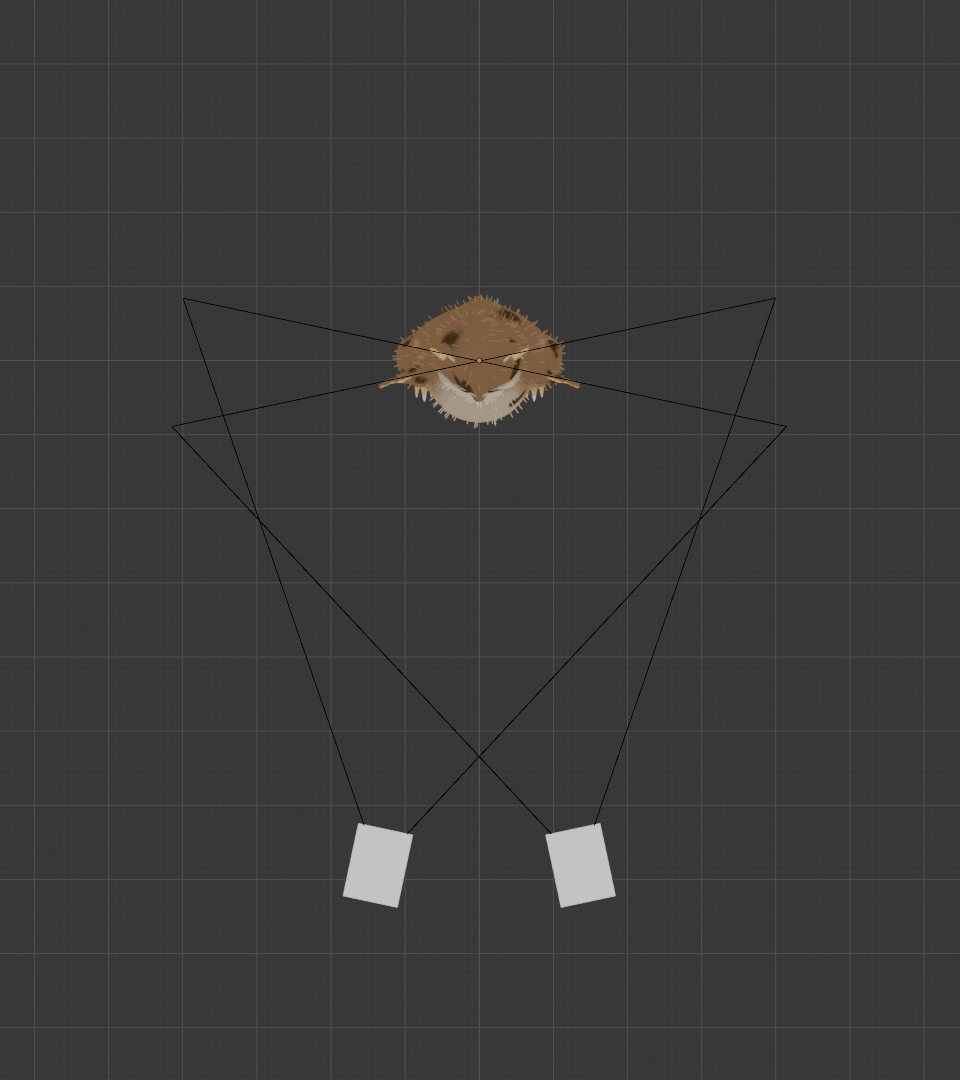
Through our two eyes, we perceive almost the same image. Like two cameras positioned right next to each other. But there are slight differences that tell our brain how far away it is from the point we’re currently looking at - the greater the difference, the greater the distance. Additionally, these differences make objects appear even more three-dimensional, since we view them from multiple perspectives. From all these differences between the two images, our brain constructs a three-dimensional space that we can truly perceive.
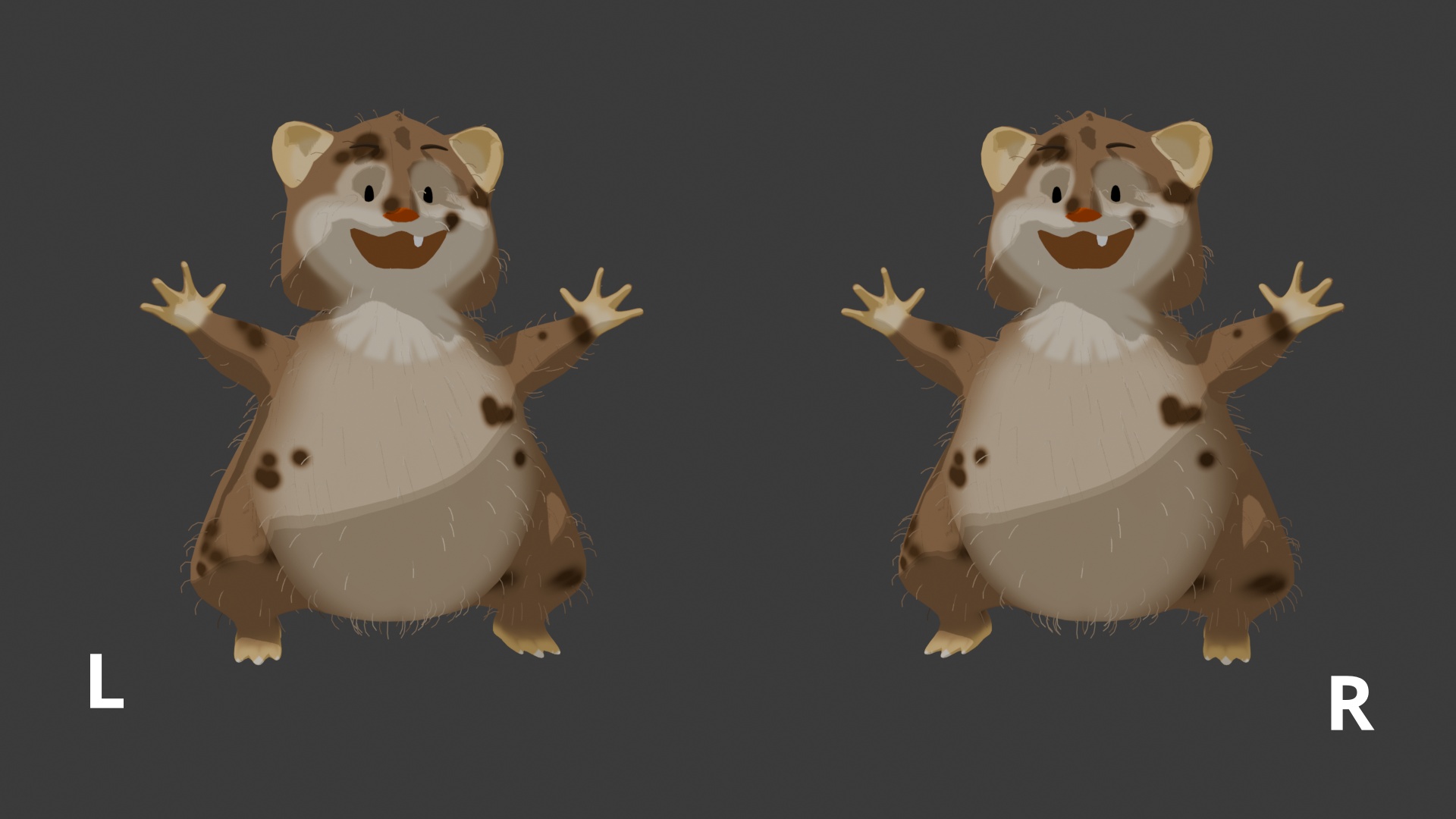
How does it become ONE video again?
So that each eye sees a different image, I’ve chosen the simplest method here: anaglyphic 3D glasses. This method uses two complementary colors - red and cyan - to ensure the greatest possible contrast.
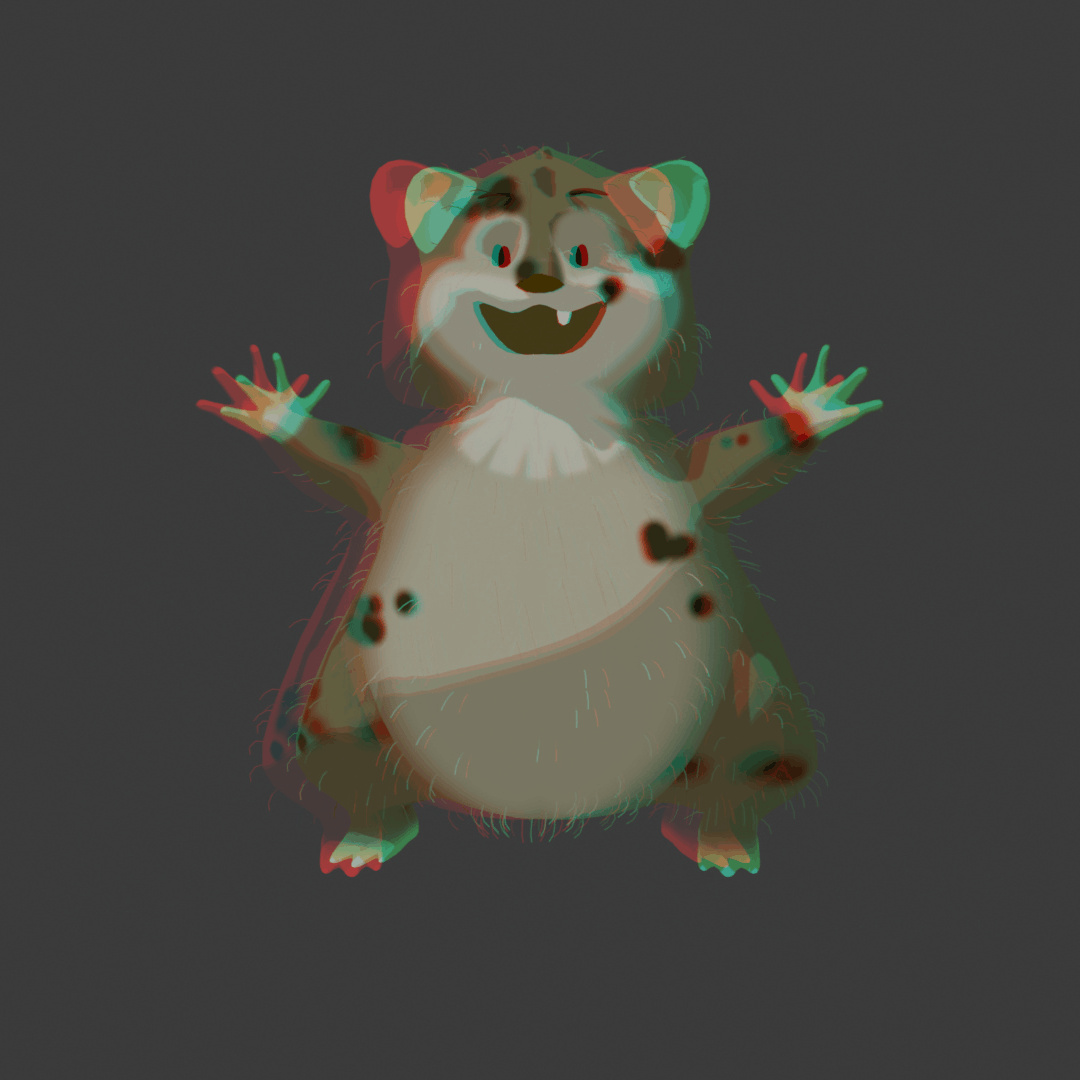
Then both images or videos - which are essentially just sequences of images - are colored red or cyan and superimposed on top of each other. Without glasses, this creates an image that is rather headache-inducing, as shown on the here.
When you put on the glasses, the eye behind the red lens can see only the cyan part of the image, since the red in the lens acts like a filter, and the eye behind the cyan lens can see only the red part of the image. The resulting image is supposed to look black-and-white, but it doesn’t quite. You have to make a bit of an effort to ignore the red and cyan colors in your mind. But the result comes surprisingly close to the intended effect.
Of course, polarized 3D glasses work even better in 3D theaters. They preserve the original colors, but require screens or projectors that most people don’t have at home.
Where can I get anaglyphic 3D glasses?
Every now and then, you come across a pair of these glasses, for example at film festivals or as a bonus with video games. I got mine with the racing game “Trackmania.” So it’s possible that one of your friends has a pair if you don’t. But you can also make your own:
To make your own color-changing glasses, you'll need:
- red and cyan transparent film
- a sheet of cardboard (preferably black)
- a stapler
To do this, pick up some red and cyan-colored transparent plastic sheeting from a craft store. This is often sold as part of windmill craft kits. Cut out the „lenses“ from the sheeting. You’ll end up with one red piece and one cyan piece, each measuring 5 cm by 3.5 cm.
Then get some cardboard (preferably black) and cut out the following shape:
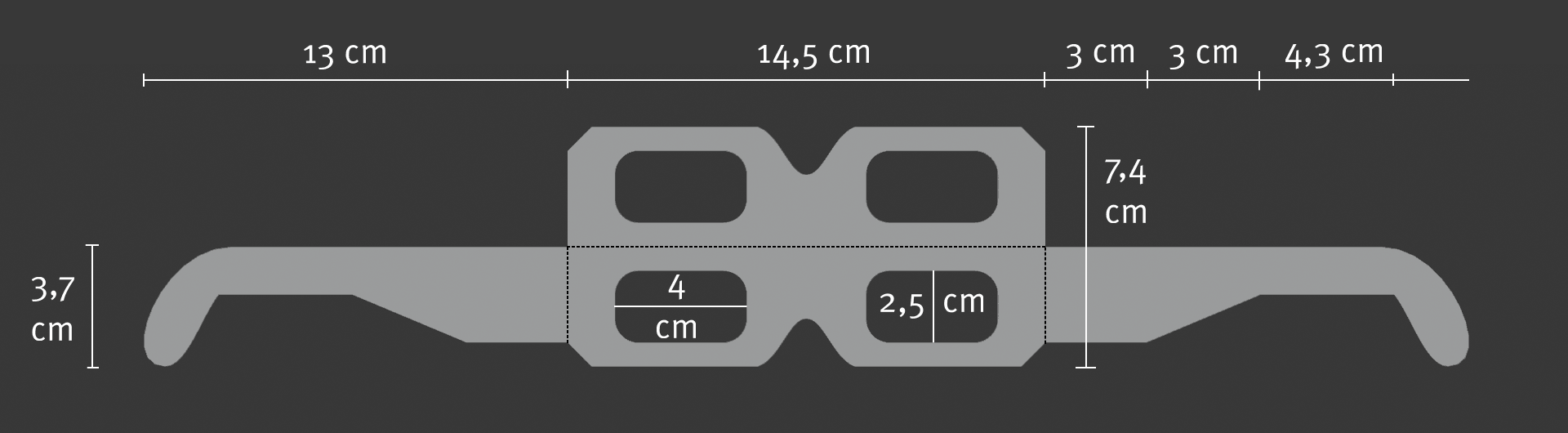
You only need to estimate the dimensions that aren't marked; it doesn't have to be perfect. Now place the red sheet over the lower left hole and the cyan sheet over the lower right hole, and fold the top half of the glasses down.
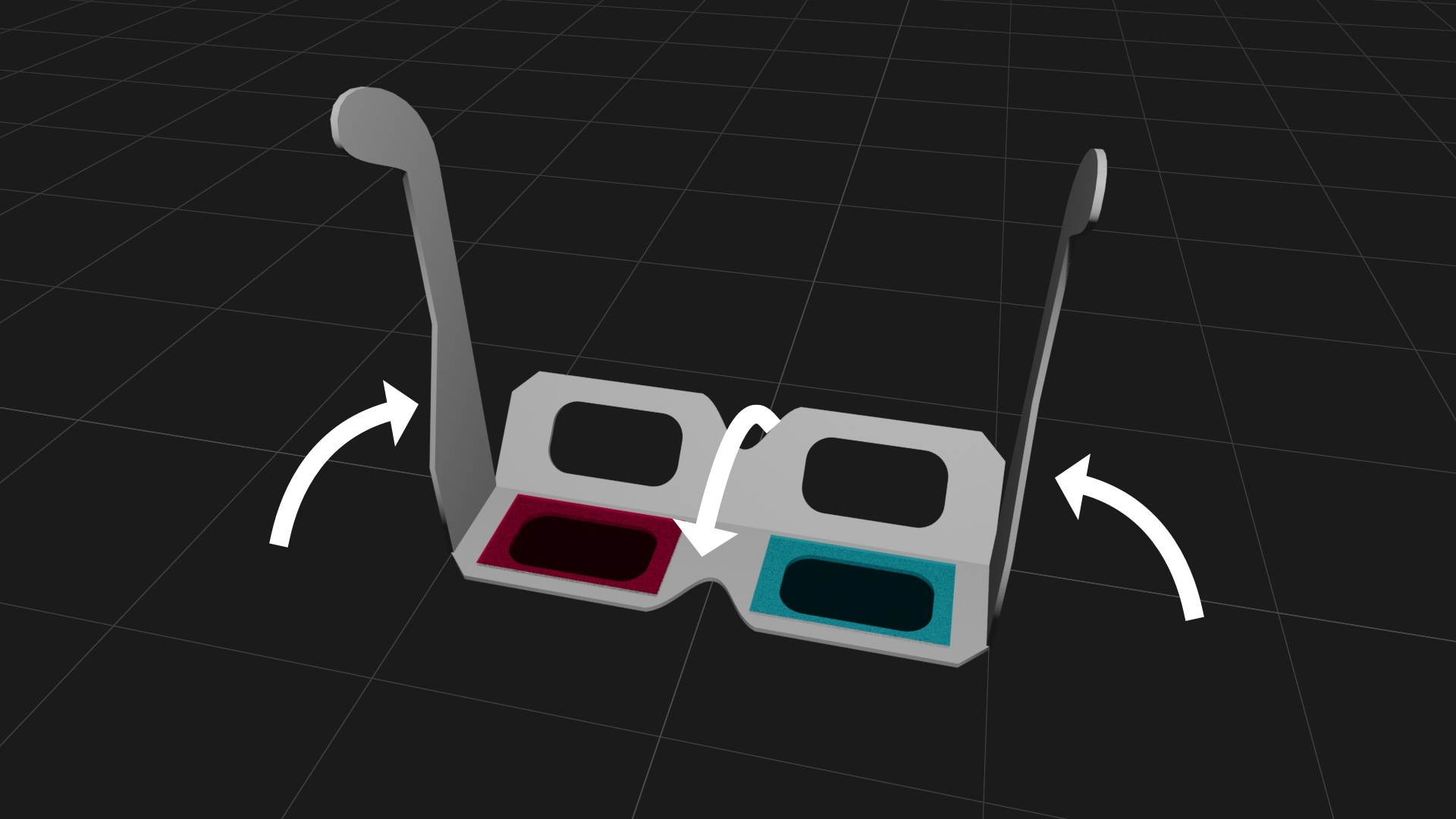
Now use the stapler to staple each lens twice so that the front and back are held together with the foil, and fold the temples upward. Here you can see the original from Trackmania again and the version we recreated using black construction paper.
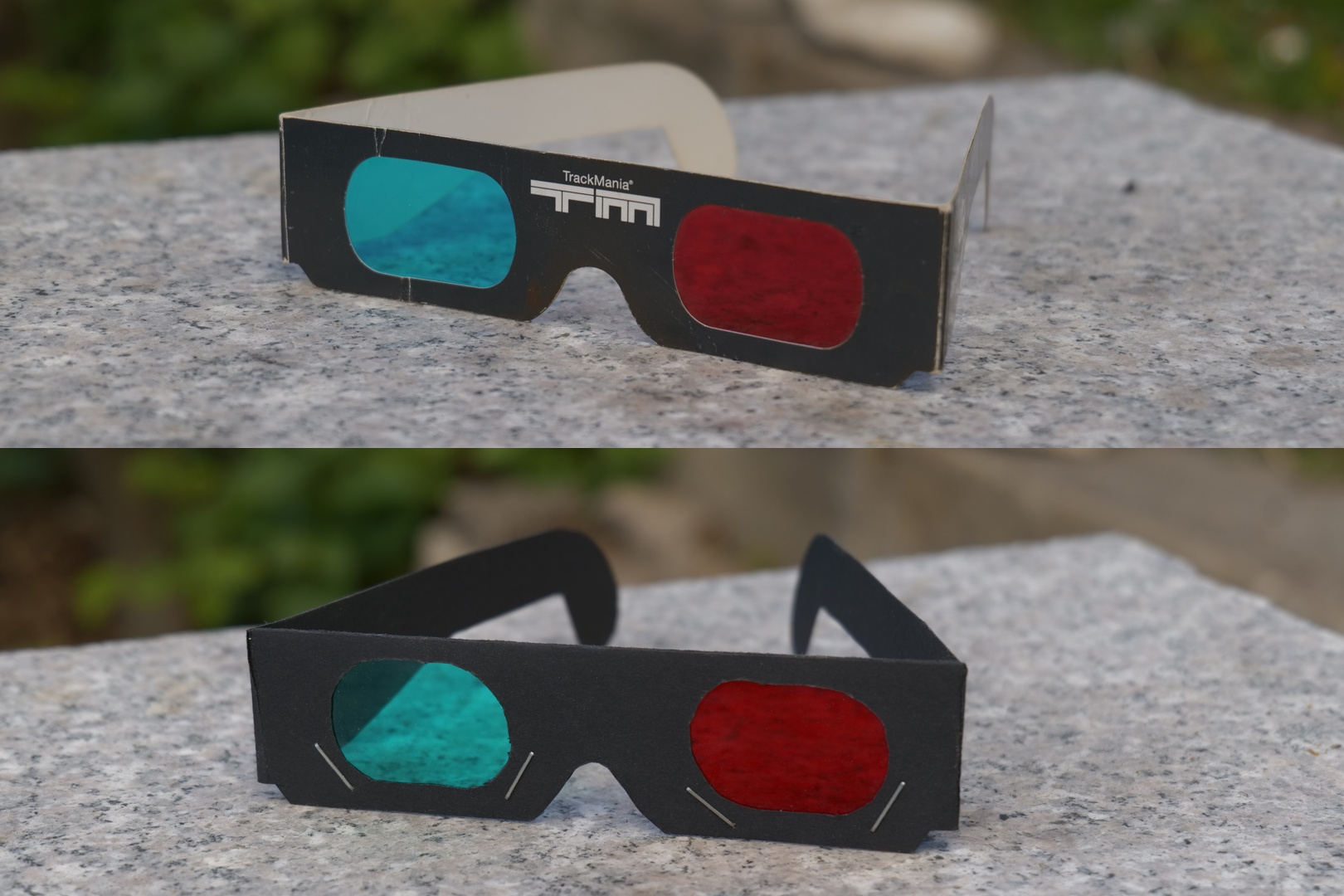
DONE! Now enjoy Ralle & Bolle in 3D. You can find the video at the beginning of the article.
